
How Smart Water Quality Monitoring is Transforming Real-Time Water Safety

Why Real-Time Ambient Air Quality Monitoring is Critical for Indoor Office Spaces As modern workplaces prioritize health, productivity, and sustainability, ensuring clean indoor air has never been more crucial. While many businesses focus on Indoor Air Quality (IAQ), they often overlook a key factor: Ambient Air Quality Monitoring Systems (AAQMS). Monitoring real-time ambient air quality—the condition of the air outside your building—plays a vital role in determining the air quality inside. In this blog, we explore why integrating a real-time ambient air quality monitor is essential for effective IAQ management in office environments. What is Ambient Air Quality Monitoring? An ambient air quality monitoring system measures pollutants in the surrounding outdoor environment, including: PM2.5 and PM10 (Particulate Matter) NO₂ (Nitrogen Dioxide) CO (Carbon Monoxide) SO₂ (Sulfur Dioxide) Ozone, and more This data is typically summarized in the Air Quality Index (AQI)—a real-time score indicating pollution levels. The higher the AQI, the worse the outdoor air quality. The Link Between Ambient and Indoor Air Quality Office buildings rely on HVAC systems that draw air from the outdoors. If the ambient air quality is poor, it directly impacts the indoor environment—even if indoor pollution sources are well-controlled. This is where real-time ambient air quality monitors become indispensable. By continuously tracking outdoor air conditions, facility managers can: ✅ Regulate HVAC air intake ✅ Adjust filtration levels ✅ Trigger alerts when pollution thresholds are exceeded This proactive approach ensures healthier IAQ, especially in cities like Delhi, Mumbai, Bengaluru, or Hyderabad, where outdoor pollution fluctuates rapidly. 4 Key Benefits of Real-Time Ambient Air Quality Monitoring in Offices Smarter HVAC Operations With real-time ambient air quality data, building automation systems can: Limit outside air intake during pollution spikes Activate purifiers or electrostatic filters Delay fresh air cycles during high-AQI hours This improves energy efficiency while maintaining safe IAQ levels. Employee Health & Well-being Studies show poor air quality leads to: Fatigue & headaches Reduced cognitive performance Increased sick leave A proactive monitoring approach ensures employee wellness, boosts morale, and enhances productivity. ESG & Regulatory Compliance Companies aiming to meet Environmental, Social, and Governance (ESG) targets must demonstrate air quality management. Using ambient air monitoring systems strengthens environmental reporting, supports LEED/BREEAM certifications, and ensures regulatory compliance. Risk Management in High-Pollution Areas In metro cities, AQI levels often reach “very poor” or “hazardous.” Offices near roads, industrial zones, or construction sites face higher risks. Real-time ambient monitoring helps detect and mitigate risks before they affect indoor air. How Caleedo Helps: A Smarter Approach to Air Quality At Caleedo, we believe healthy indoor environments require holistic, data-driven solutions. Our end-to-end smart facility platform integrates: 🔹 Real-Time Ambient Air Quality Monitors Track outdoor pollutants (PM2.5, NO₂, SO₂, CO, O₃) with live AQI updates. 🔹 IAQ Sensors Across Workspaces Monitor indoor CO₂, temperature, humidity, and VOCs to optimize comfort. 🔹 Centralized Analytics Dashboard Gain insights with historical trends, benchmarks, and predictive analytics. 🔹 Automated Alerts & Maintenance Triggers Get instant notifications when air quality thresholds are breached. 🔹 Customizable ESG & Compliance Reports Generate downloadable reports for regulatory and sustainability goals. Conclusion Indoor air quality doesn’t exist in isolation—it begins with what comes from outside. By deploying a real-time ambient air quality monitoring system, offices can gain the intelligence they need to ensure cleaner, safer, and more compliant indoor environments. Incorporating ambient air monitoring into your IAQ strategy is not just smart—it’s essential for the health and success of your workplace.
Vikas Saxena at Security Summit India 2025 | Caleedo
Vikas Saxena Joins Industry Leaders at Security Summit India 2025 We are pleased to share that our CEO, Mr. Vikas Saxena, participated as a distinguished speaker at Security Summit India 2025, held on 1st August 2025 at the India International Centre, New Delhi. Mr. Saxena delivered a keynote on the topic: “Role of AI & IoT in Modernizing Supply Chain Surveillance”, where he highlighted how emerging technologies are transforming supply chain visibility, risk mitigation, and operational efficiency. His session focused on leveraging AI and IoT to enable real-time intelligence, predictive analytics, and end-to-end transparency in modern supply chain ecosystems. The summit brought together industry leaders, innovators, and security professionals to discuss the future of safety and digital transformation across critical sectors. In recognition of his valuable contribution, Mr. Saxena was awarded a Certificate of Appreciation by the summit organizers. This marks yet another milestone in Caleedo’s commitment to driving innovation and thought leadership in the smart infrastructure and workplace technology space.
Why Ambient Air Quality Monitoring System Matters for Offices

Why Real-Time Ambient Air Quality Monitoring is Critical for Indoor Office Spaces As modern workplaces prioritize health, productivity, and sustainability, ensuring clean indoor air has never been more crucial. While many businesses focus on Indoor Air Quality (IAQ), they often overlook a key factor: Ambient Air Quality Monitoring Systems (AAQMS). Monitoring real-time ambient air quality—the condition of the air outside your building—plays a vital role in determining the air quality inside. In this blog, we explore why integrating a real-time ambient air quality monitor is essential for effective IAQ management in office environments. What is Ambient Air Quality Monitoring? An ambient air quality monitoring system measures pollutants in the surrounding outdoor environment, including: PM2.5 and PM10 (Particulate Matter) NO₂ (Nitrogen Dioxide) CO (Carbon Monoxide) SO₂ (Sulfur Dioxide) Ozone, and more This data is typically summarized in the Air Quality Index (AQI)—a real-time score indicating pollution levels. The higher the AQI, the worse the outdoor air quality. The Link Between Ambient and Indoor Air Quality Office buildings rely on HVAC systems that draw air from the outdoors. If the ambient air quality is poor, it directly impacts the indoor environment—even if indoor pollution sources are well-controlled. This is where real-time ambient air quality monitors become indispensable. By continuously tracking outdoor air conditions, facility managers can: ✅ Regulate HVAC air intake ✅ Adjust filtration levels ✅ Trigger alerts when pollution thresholds are exceeded This proactive approach ensures healthier IAQ, especially in cities like Delhi, Mumbai, Bengaluru, or Hyderabad, where outdoor pollution fluctuates rapidly. 4 Key Benefits of Real-Time Ambient Air Quality Monitoring in Offices Smarter HVAC Operations With real-time ambient air quality data, building automation systems can: Limit outside air intake during pollution spikes Activate purifiers or electrostatic filters Delay fresh air cycles during high-AQI hours This improves energy efficiency while maintaining safe IAQ levels. Employee Health & Well-being Studies show poor air quality leads to: Fatigue & headaches Reduced cognitive performance Increased sick leave A proactive monitoring approach ensures employee wellness, boosts morale, and enhances productivity. ESG & Regulatory Compliance Companies aiming to meet Environmental, Social, and Governance (ESG) targets must demonstrate air quality management. Using ambient air monitoring systems strengthens environmental reporting, supports LEED/BREEAM certifications, and ensures regulatory compliance. Risk Management in High-Pollution Areas In metro cities, AQI levels often reach “very poor” or “hazardous.” Offices near roads, industrial zones, or construction sites face higher risks. Real-time ambient monitoring helps detect and mitigate risks before they affect indoor air. How Caleedo Helps: A Smarter Approach to Air Quality At Caleedo, we believe healthy indoor environments require holistic, data-driven solutions. Our end-to-end smart facility platform integrates: 🔹 Real-Time Ambient Air Quality Monitors Track outdoor pollutants (PM2.5, NO₂, SO₂, CO, O₃) with live AQI updates. 🔹 IAQ Sensors Across Workspaces Monitor indoor CO₂, temperature, humidity, and VOCs to optimize comfort. 🔹 Centralized Analytics Dashboard Gain insights with historical trends, benchmarks, and predictive analytics. 🔹 Automated Alerts & Maintenance Triggers Get instant notifications when air quality thresholds are breached. 🔹 Customizable ESG & Compliance Reports Generate downloadable reports for regulatory and sustainability goals. Conclusion Indoor air quality doesn’t exist in isolation—it begins with what comes from outside. By deploying a real-time ambient air quality monitoring system, offices can gain the intelligence they need to ensure cleaner, safer, and more compliant indoor environments. Incorporating ambient air monitoring into your IAQ strategy is not just smart—it’s essential for the health and success of your workplace.
Delhi Strengthens Firecracker Ban to Combat Air Pollution

Caleedo Featured in Thermal Control Magazine for Smart Air Quality Innovation Caleedo is proud to be featured in Thermal Control Magazine for its impactful role in reshaping workplace health through smart air quality monitoring. The article, titled “Smart Air Quality Monitoring Creates Healthier and Safer Workplaces,” highlights Caleedo’s commitment to driving wellness, safety, and sustainability in indoor environments. By leveraging real-time data, IoT-enabled sensors, and predictive insights, Caleedo’s air quality monitoring solution empowers organizations to proactively manage indoor air quality and create healthier spaces for occupants. The feature recognizes Caleedo as a frontrunner in the digital hygiene and smart facility ecosystem. This recognition underscores our vision to transform traditional workplaces into intelligent, responsive, and people-centric environments. 👉 Click here to read the full article Read more 👉 Click here to read the full article Read more
Caleedo Featured in Thermal Control Magazine for Smart Air Quality Monitoring
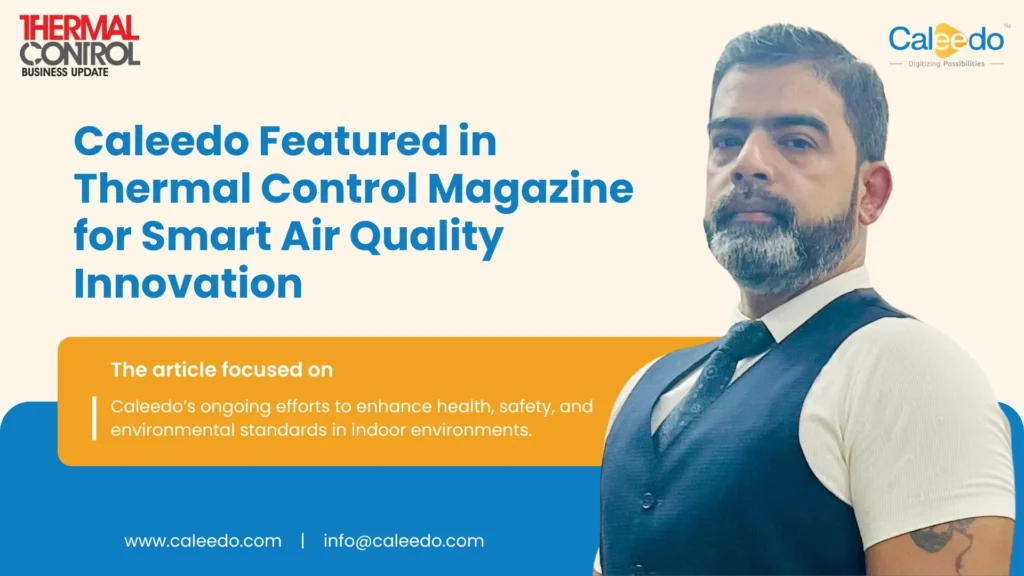
Caleedo Featured in Thermal Control Magazine for Smart Air Quality Innovation Caleedo is proud to be featured in Thermal Control Magazine for its impactful role in reshaping workplace health through smart air quality monitoring. The article, titled “Smart Air Quality Monitoring Creates Healthier and Safer Workplaces,” highlights Caleedo’s commitment to driving wellness, safety, and sustainability in indoor environments. By leveraging real-time data, IoT-enabled sensors, and predictive insights, Caleedo’s air quality monitoring solution empowers organizations to proactively manage indoor air quality and create healthier spaces for occupants. The feature recognizes Caleedo as a frontrunner in the digital hygiene and smart facility ecosystem. This recognition underscores our vision to transform traditional workplaces into intelligent, responsive, and people-centric environments. 👉 Click here to read the full article Read more 👉 Click here to read the full article Read more
How smart washroom solutions align with organizational sustainability priorities

How smart washroom solutions align with organizational sustainability priorities As organizations sharpen their focus on sustainability, every corner of the workplace is being re-evaluated through the lens of resource efficiency, cost control, and environmental responsibility. Deloitte’s 2024 CxO Sustainability Report reveals certain insights on what organizations are prioritising when it comes to sustainability at workplaces. According to the report, innovation (including AI and digital), economic outlook, and climate change are the top three priorities for organizations. When it comes to sustainability investments, 85% of organizations have reported an increase — either slightly or significantly. This growing investment in sustainability is not just limited to large-scale initiatives like renewable energy or carbon offsets. Increasingly, organizations are recognizing the value of optimizing everyday operational areas — like facilities management — to drive meaningful environmental impact. One such area gaining traction is the washroom, where smarter systems are delivering measurable benefits across multiple sustainability touchpoints. IoT-enabled smart washroom solutions are redefining washroom management for service teams— bringing in data, automation, and predictive intelligence to elevate both user experience and sustainability outcomes. These systems aren’t just about cleanliness — they’re about using resources wisely, reducing waste, and making operations leaner and greener. Here’s how smart washroom systems are helping organizations deliver on their sustainability priorities. 1. Water conservation through scheduled & on-demand cleaning Water scarcity is a pressing concern in India, with commercial buildings accounting for nearly 15–20% of urban water usage. Conventional cleaning schedules are fixed regardless of how much the washroom is used. Smart washroom systems digitize and optimize these routines by tracking occupancy levels, footfall, and usage trends. By enabling scheduled cleaning backed by real-time data, and on-demand service tickets, organizations can eliminate unnecessary cleaning rounds — reducing water usage significantly while maintaining hygiene standards. ✅ Sustainability Benefit: Reduced water consumption, lower utility bills, and more efficient cleaning practices help address ‘climate change’ agenda for organizations. 2. Minimizing consumables wastage with real-time tracking and forecasting Washrooms are a major source of paper and chemical consumption. Without visibility, consumables like tissue, soap, and sanitizers are often overstocked, underused, or wasted. Smart washroom systems track consumable levels in real-time and generate usage trends. This allows facility managers & service teams to plan inventory better, reduce pilferage, and avoid the carbon and packaging footprint that comes with excessive stocking. ✅ Sustainability Benefit: Less material waste, reduced plastic and paper consumption, and better budget planning links to better ‘economic outcomes’. 3. Lower environmental impact of cleaning agents Traditional routine cleaning can lead to high usage of chemicals and detergents — many of which contain harsh ingredients that impact indoor air quality and indoor environment. Cleaning products emit volatile organic compounds (VOCs) like bleach-derived chlorinated VOCs (e.g., chloroform). Indoor air concentrations can increase 8 to 52 times during use, posing risks including respiratory issues and carcinogenic exposures. By optimizing cleaning schedules based on actual demand and washroom usage, smart washroom systems reduce the frequency and volume of chemical usage for service teams. Fewer cleaning rounds means fewer chemicals down the drain — and less risk to human and environmental health. ✅ Sustainability Benefit: Reduced chemical waste, cost savings, and healthier workplaces. 4. Data insights that support sustainable decision-making When it comes to improving sustainability outcomes through data and system-derived insights, the benefits are both significant and measurable. Leading global brands have demonstrated how intelligent use of data can drive real impact around sustainability. For example, a large global retail coffee house chain leveraged analytics to optimize its sourcing and operational strategies, resulting in a 38% reduction in greenhouse gas emissions across its operations. Similarly, a large global multi-channel retailer used real-time analytics in its food supply chain to achieve a 20% reduction in food waste, preventing 1.8 billion pounds of waste from ending up in landfills. Smart washroom systems provide web dashboards & data-driven analysis for continuous visibility into usage patterns, peak traffic times, refill cycles, and equipment performance. This level of insight empowers organizations to make more informed, sustainable choices in areas like water usage, manpower deployment, and consumables management. ✅ Sustainability Benefit: Data-backed efficiency that leads to long-term reduction in waste, costs, and environmental load. 5. Smarter resource planning & manpower efficiency With digital cleaning checklists, automated work orders, and real-time task tracking, facility managers & service teams gain unprecedented control and visibility over daily washroom operations. Instead of relying on fixed routines or manual supervision, teams can be deployed based on real-time demand and usage patterns. This ensures that high-traffic areas receive timely attention, while low-usage zones aren’t cleaned unnecessarily — reducing wasted effort and resources. Moreover, automated scheduling helps eliminate redundant tasks, streamline coordination, and improve accountability, all while freeing up staff to focus on more critical or value-added tasks. ✅ Sustainability Benefit: Smarter deployment of human resources translates into fewer cleaning cycles, reduced use of water, electricity, and cleaning agents, and lower wear and tear on equipment — collectively resulting in a more resource-efficient and environmentally responsible operation. 6. Summary In summary, smart washroom solutions go beyond enhancing hygiene and user experience — they play a meaningful role in advancing organizational sustainability goals. By digitizing cleaning schedules, optimizing resource use, and offering real-time visibility into consumption patterns, these systems help reduce water and chemical usage, minimize waste, and improve operational efficiency. As companies continue to increase investments in sustainability, smart washroom technologies offer a practical, measurable, and impactful way to drive environmental responsibility within everyday facility operations.
The COGfx Study – How Indoor Air Quality Impacts Cognitive Function?

The COGfx Study – How Indoor Air Quality Impacts Cognitive Function? Your Brain Is Only as Sharp as the Air You Breathe The average person spends nearly 90% of their time inside—in offices, homes, schools, and public buildings. This makes indoor air quality (IAQ) not just a matter of comfort, but a major factor in our health, productivity, and brain performance. Groundbreaking research by Harvard University’s T.H. Chan School of Public Health, known as the COGfx Study, has drawn a clear, data-backed link between IAQ and cognitive function. The findings are both revealing and critical: Improved indoor air quality can substantially enhance cognitive function. What is the COGfx Study? Conducted in multiple phases starting in 2015, the study involved collaborations between Harvard, Syracuse University, and SUNY Upstate Medical University. It used real-world office settings and controlled lab simulations to measure the cognitive performance of participants exposed to different indoor air conditions. The results? Simply improving indoor air—through better ventilation and reduced pollutants—led to dramatic improvements in cognitive performance across various domains like strategy, crisis response, and decision-making. Effect of IAQ on How We Think Across its three phases, the COGfx Study revealed several important facts: 1. Pollutants Cloud Judgment The study also looked at the effect of carbon dioxide (CO₂) and fine particulate matter (PM2.5)—two pollutants common in indoor spaces. Even relatively small increases in CO₂ (500 ppm) led to a 15% drop in cognitive performance. A 10 μg/m³ increase in PM2.5 resulted in slower response times and lower accuracy. In essence: stuffy, polluted rooms lead to foggy, less productive brains. 2. Ventilation Boosts Brainpower Participants were placed in different controlled environments mimicking typical office conditions—conventional, green, and enhanced green buildings. When air ventilation was increased (doubling the outdoor air flow), participants scored up to 101% higher on cognitive tests. These weren’t simple memory tests either. The assessments focused on real-world executive functions—like the ability to manage time, make decisions under pressure, and process information effectively. 3. Green Buildings Deliver Mental Dividends In the real-world “Buildingomics” phase, office workers in LEED-certified green buildings showed: 26% higher cognitive scores 38% better focus 44% better task performance 73% improved crisis response The link was consistent across countries, industries, and building types. Better air = better thinking. What makes poor air quality such an improtant factor for cognitive health? CO₂ and Decision Fatigue: High carbon dioxide levels can reduce oxygenation in the brain, leading to slower mental processes, poor concentration, and even headaches. PM2.5 and Neuroinflammation: Fine particulate matter can penetrate deep into the lungs and bloodstream, triggering inflammation that affects the brain. Long-term exposure has been linked to reduced memory and even increased risk of neurodegenerative diseases. VOC Exposure: Volatile Organic Compounds—emitted from paints, carpets, furniture—can impair coordination, mood, and clarity. Your brain needs clean oxygen-rich blood to function at peak capacity. Polluted indoor environments disrupt that supply chain. What It Means for Workplaces In workplaces, brain power is king. Employees make dozens of decisions every day—from strategic planning to quick-fire problem-solving. A small increase in cognitive function can mean the difference between a good and a great outcome. The COGfx Study proves that investing in clean indoor air is not just a health strategy—it’s a business imperative. Conclusion The findings from COGfx helped kickstart a growing global movement around “healthy buildings”. This approach doesn’t just aim for green certification—it goes further to prioritize human well-being as a key performance metric. We often focus on coffee, supplements, and productivity hacks to sharpen our mental edge—but forget the most foundational factor of all: air. The COGfx Study is a wake-up call. It shows that we don’t need radical new inventions to boost human potential—we just need to optimize the environments we already live and work in. Clean air shouldn’t be a luxury. It’s a neuroscience-backed necessity for better thinking, better decision-making, and better living.
Caleedo recognized by APAC Insider for leadership in Workplace Technology innovation
Caleedo recognized by APAC Insider for leadership in Workplace Technology innovation At Caleedo, innovation isn’t just a concept—it’s the driving force behind everything we build. We’re thrilled to share that Caleedo – Digitizing Possibilities has been recognized for its leadership in workplace innovation, with our CEO, Vikas Saxena, being named ‘Workplace Technology CEO of the Year 2025’ by APAC Insider! 🎉 This prestigious honor reflects Caleedo’s unwavering commitment to transforming workplaces into smarter, healthier, and more efficient environments. By blending cutting-edge technologies with customer-first approach, we continue to deliver intelligent workplace solutions that drive productivity, sustainability, and employee well-being. This recognition inspires us to keep pushing boundaries, shaping the future of indoor environments where people and technology thrive together. At Caleedo, innovation isn’t just a concept—it’s the driving force behind everything we build. We’re thrilled to share that Caleedo – Digitizing Possibilities has been recognized for its leadership in workplace innovation, with our CEO, Vikas Saxena, being named ‘Workplace Technology CEO of the Year 2025’ by APAC Insider! 🎉 This prestigious honor reflects Caleedo’s unwavering commitment to transforming workplaces into smarter, healthier, and more efficient environments. By blending cutting-edge technologies with customer-first approach, we continue to deliver intelligent workplace solutions that drive productivity, sustainability, and employee well-being. This recognition inspires us to keep pushing boundaries, shaping the future of indoor environments where people and technology thrive together. Check out some exciting moments from the event! Read more Check out some exciting moments from the event! Read more
Caleedo recognized among the Top 10 startups by Chandigarh Angels Network and TIE at Startup Shark Soiree 4.0

Caleedo Recognized as a Top 10 Startup by Chandigarh Angels Network and TIE We are excited to share that Caleedo was honored as one of the Top 10 Startups at Startup Shark Soiree 4.0, an exclusive startup pitching event held as part of TIECON Chandigarh 2025, in collaboration with Chandigarh Angels Network. The event was an inspiring platform that brought together visionary entrepreneurs, industry leaders, and investors to celebrate innovation and disruptive ideas. It was a privilege to present our vision and demonstrate how Caleedo is transforming workplaces and built environments through cutting-edge technology. We are excited to share that Caleedo was honored as one of the Top 10 Startups at Startup Shark Soiree 4.0, an exclusive startup pitching event held as part of TIECON Chandigarh 2025, in collaboration with Chandigarh Angels Network. The event was an inspiring platform that brought together visionary entrepreneurs, industry leaders, and investors to celebrate innovation and disruptive ideas. It was a privilege to present our vision and demonstrate how Caleedo is transforming workplaces and built environments through cutting-edge technology. We are excited to share that Caleedo was honored as one of the Top 10 Startups at Startup Shark Soiree 4.0, an exclusive startup pitching event held as part of TIECON Chandigarh 2025, in collaboration with Chandigarh Angels Network. The event was an inspiring platform that brought together visionary entrepreneurs, industry leaders, and investors to celebrate innovation and disruptive ideas. It was a privilege to present our vision and demonstrate how Caleedo is transforming workplaces and built environments through cutting-edge technology.We are excited to share that Caleedo was honored as one of the Top 10 Startups at Startup Shark Soiree 4.0, an exclusive startup pitching event held as part of TIECON Chandigarh 2025, in collaboration with Chandigarh Angels Network. The event was an inspiring platform that brought together visionary entrepreneurs, industry leaders, and investors to celebrate innovation and disruptive ideas. It was a privilege to present our vision and demonstrate how Caleedo is transforming workplaces and built environments through cutting-edge technology.We are excited to share that Caleedo was honored as one of the Top 10 Startups at Startup Shark Soiree 4.0, an exclusive startup pitching event held as part of TIECON Chandigarh 2025, in collaboration with Chandigarh Angels Network. The event was an inspiring platform that brought together visionary entrepreneurs, industry leaders, and investors to celebrate innovation and disruptive ideas. It was a privilege to present our vision and demonstrate how Caleedo is transforming workplaces and built environments through cutting-edge technology.We are excited to share that Caleedo was honored as one of the Top 10 Startups at Startup Shark Soiree 4.0, an exclusive startup pitching event held as part of TIECON Chandigarh 2025, in collaboration with Chandigarh Angels Network. The event was an inspiring platform that brought together visionary entrepreneurs, industry leaders, and investors to celebrate innovation and disruptive ideas. It was a privilege to present our vision and demonstrate how Caleedo is transforming workplaces and built environments through cutting-edge technology. Check out some exciting moments from the event! Read more
Maharashtra pollution control board mandates air quality monitoring for construction sites

Maharashtra pollution control board mandates air quality monitoring for construction sites Original Article – https://www.msn.com/en-in/news/India/all-mumbai-and-mmr-construction-sites-told-to-install-air-quality-monitors/ To combat rising air pollution, the Maharashtra Pollution Control Board (MPCB) has made it mandatory for all construction sites in Mumbai and the Mumbai Metropolitan Region (MMR) to install sensor-based air quality monitors. Developers must comply with this directive within a month or face penalties, including fines and potential site closures. This step aims to ensure real-time air pollution tracking and accountability in the construction sector. Why This Mandate? Mumbai’s air quality has been deteriorating due to various factors, including vehicular emissions, industrial pollution, and waste burning. However, construction dust remains a major contributor to poor air quality. Unregulated construction activities release large amounts of particulate matter (PM2.5 and PM10), leading to severe health concerns such as respiratory diseases, asthma, and bronchitis. By implementing air quality monitors, authorities can track pollution levels at construction sites and take necessary action when pollution thresholds are exceeded. Implementation & Compliance The Brihanmumbai Municipal Corporation (BMC) has been assigned the responsibility of ensuring compliance. The BMC’s environment department has issued Standard Operating Procedures (SOPs) for officials to oversee pollution control measures at construction sites. In addition to installing air quality monitors, developers must follow dust control measures like water sprinkling, covering construction materials, and proper debris management. Non-compliance with these regulations may result in strict action against the violators. Expected Impact Real-time air quality tracking will help identify pollution hotspots, allowing authorities to take corrective actions swiftly. This move ensures greater accountability among developers and reinforces environmental responsibility in urban planning. If implemented effectively, this initiative will contribute significantly to improving Mumbai’s air quality, making the city healthier for its residents.