
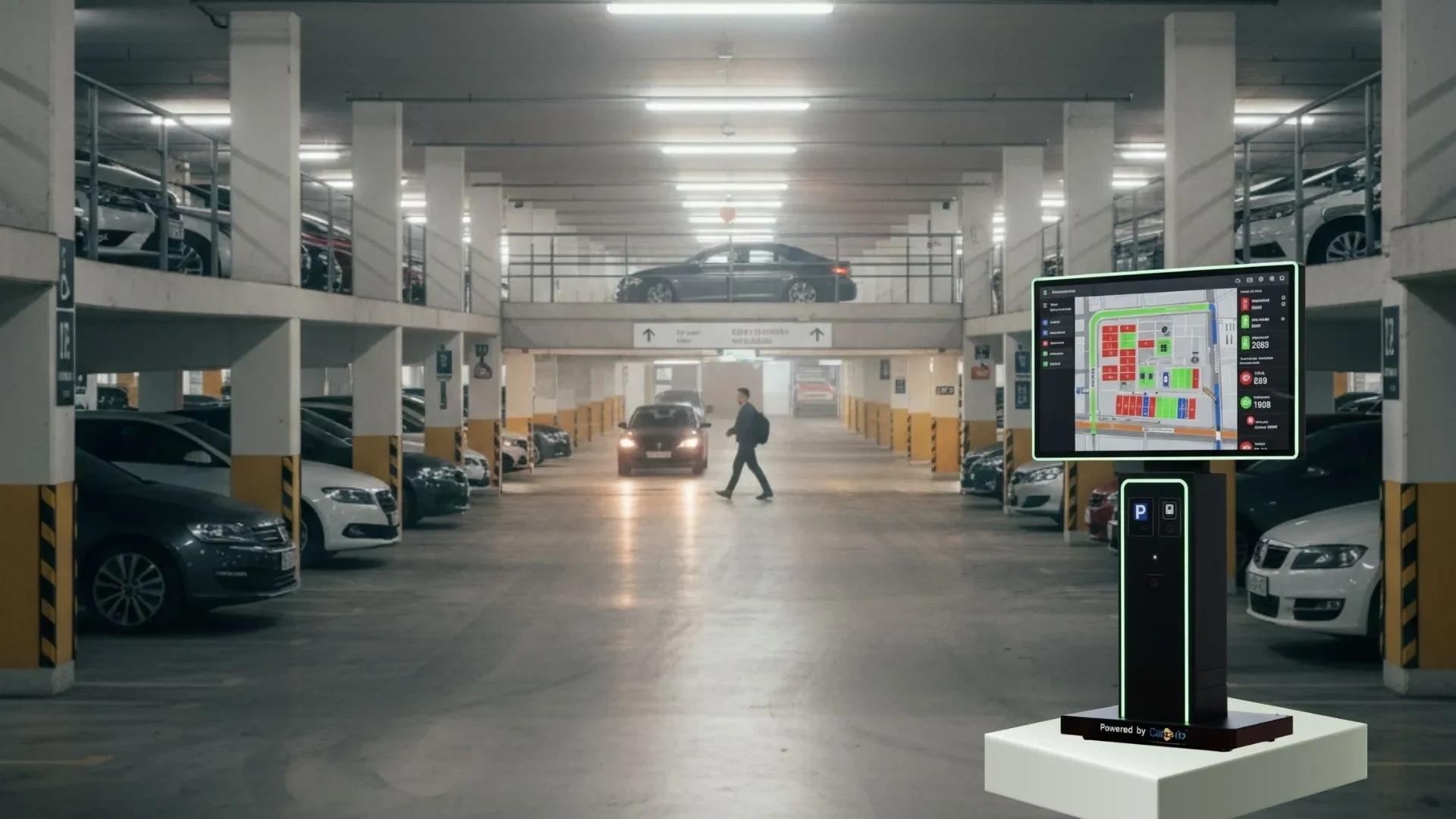
India’s urban landscape is changing fast—and parking is quietly becoming one of its most critical pressure points. With rapid urbanization, rising vehicle ownership, and dense mixed-use developments, the demand for managed parking facilities has grown from a convenience issue into a matter of urban efficiency, health, and productivity.
India adds millions of vehicles to its roads every year. Passenger vehicle ownership has crossed 30 million units annually in sales, while two-wheelers and commercial vehicles continue to grow alongside them. This surge is being fueled by multiple sectors:
Despite this growth, a large percentage of parking spaces in India remain manually managed or entirely unmanaged, leading to inefficiencies that extend well beyond traffic congestion.
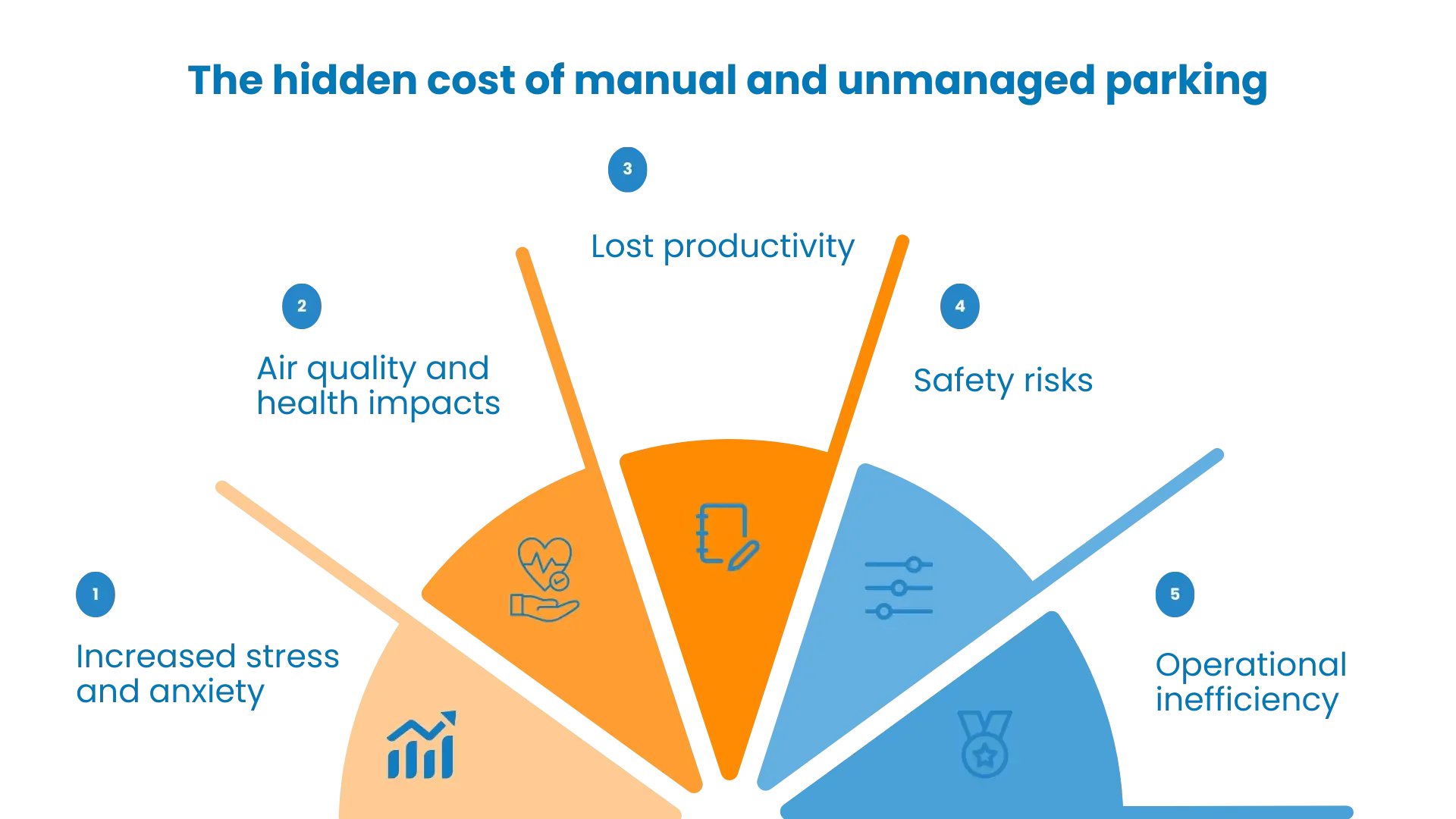
Poorly managed parking has a direct and often underestimated impact on health, wellness, and productivity.
Modern Parking Management Systems (PMS) use a combination of IoT, automation, and mobile platforms to convert parking from chaos into a predictable, data-driven service.
1. IoT-enabled sensing and visibility
Smart sensors (ultrasonic, magnetic, camera-based) detect real-time occupancy at slot, zone, or floor level. This data feeds centralized dashboards that show exactly where space is available—eliminating guesswork.
2. Automated access and enforcement
3. Smart guidance and wayfinding
Digital signages and mobile apps guide drivers directly to available slots, reducing circulation time, emissions, and frustration—especially in large basements and multi-level structures.
4. Mobile apps and user experience
Apps allow users to:
This turns parking into a predictable, user-friendly service rather than a daily gamble.
5. Analytics and integration
Parking systems integrate with Building Management Systems (BMS), access control, and ERP platforms. Analytics reveal peak loads, underutilized areas, revenue patterns, and future capacity needs—enabling informed planning instead of reactive expansion.
ROI: why parking management pays for itself
The return on investment from a smart parking system goes far beyond fee collection.
Quantitative ROI
Qualitative ROI
Summary
In India’s dense, vehicle-heavy cities, parking is no longer a backend facility – it is a frontline experience that shapes how people perceive offices, homes, hospitals, and retail spaces. Technology-driven parking management systems transform parking from a daily frustration into a strategic asset, delivering measurable economic returns while improving health, wellness, and urban livability.
As cities continue to grow vertically and horizontally, smart parking will be as essential as smart buildings—quietly enabling productivity, safety, and sustainability at scale
While Indore’s success reflects the impact of sustained governance and citizen participation, the performance of Delhi (ranked 32nd) and several other metro cities underscores the challenges India still faces in addressing urban air pollution.