
Caleedo lights up lives of young minds with LECIN

Synergy: Caleedo two-day boot camp, Synergy 2024 Caleedo recently organised a two-day boot camp, Synergy 2024. At Synergy, we took a step back to connect as a team, recharge, and learn from each other. We explored new ideas, celebrated our wins, and built even stronger bonds. Day 1 started with insightful sessions by Vikas Saxena (CEO) on business & strategy and by Arabinda Chakraborty (CTO) on product & technology. The day concluded with our awards ceremony – Caleedo Super8 awards. Day 2 of Synergy began with a captivating guest session by Dr. Rakesh Arya, the CEO of RENEW. Dr. Arya, a renowned expert in the field of rapid entertainment and education, delivered an enlightening session on growth mindset, resposibility, ambition, habbits and time management. Synergy was a resounding success, providing a valuable platform for team building, synergizing, brainstorming, and reliving Caleedo values. Synergy was a memorable event that strengthened team bonds and reinforced Caleedo’s commitment to growth and innovation. was a resounding success, providing a valuable platform for team building, synergizing, brainstorming, and reliving Caleedo values. was a memorable event that strengthened team bonds and reinforced Caleedo’s commitment to growth and innovation. Synergy was a resounding success, providing a valuable platform for team building, synergizing, brainstorming, and reliving Caleedo values. was a memorable event that strengthened team bonds and reinforced Caleedo’s commitment to growth and innovation. was a resounding success, providing a valuable platform for team building, synergizing, brainstorming, and reliving Caleedo values. was a memorable event that strengthened team bonds and reinforced Caleedo’s commitment to growth and innovation. was a resounding success, providing a valuable platform for team building, synergizing, brainstorming, and reliving Caleedo values. was a memorable event that strengthened team bonds and reinforced Caleedo’s commitment to growth and innovation. Synergy was a resounding success, providing a valuable platform for team building, synergizing, brainstorming, and reliving Caleedo values. was a memorable event that strengthened team bonds and reinforced Caleedo’s commitment to growth and innovation. was a resounding success, providing a valuable platform for team building, synergizing, brainstorming, and reliving Caleedo values. was a memorable event that strengthened team bonds and reinforced Caleedo’s commitment to growth and innovation. Synergy was a resounding success, providing a valuable platform for team building, synergizing, brainstorming, and reliving Caleedo values. was a memorable event that strengthened team bonds and reinforced Caleedo’s commitment to growth and innovation. Know more Know more
Healthy Workplaces: A Facility Management Approach to Better Business

How healthy workplaces can enhance organizational morale, employee satisfaction, productivity, health and well-being? Introduction This blog explores the complex relationships between physical characteristics of the environment and its associated impact on health and well-being, satisfaction, productivity and cost issues. These insights can be used to assess work environments on these metrics and to identify appropriate interventions in value-adding management of buildings and facilities. The World Health Organization (WHO) defines health as “a state of complete physical, mental and social well-being and not merely the absence of disease or infirmity”. As such, a healthy workplace can be defined as a workplace that contributes to the physical, mental and social well-being of its users. Health is the result of a complex interaction between the physiological, psychological, personal and organizational resources available to individuals. The influence of the physical environment on health and well-being The past decades show a growing awareness of the impact of the physical environment on peoples’ health and well-being, both in academic research and in professional publications. This may be because of the shift from a one-sided focus on cost reduction to a more holistic and integrated value-based approach and an optimal balance between costs and benefits of interventions in buildings, facilities and services. Besides, people have become more aware of the impact of health and well-being on our quality of life and the risk of health complaints, illness or – in worst cases – burnout. The relationship between physical workplace characteristics and health and well-being has been explored by a variety of studies. It appears that in particular a poor indoor climate, noise and distraction have a negative impact on employees’ health and well-being, whereas appropriate opportunities to communicate and to concentrate and contact with nature contribute to a healthy workplace. In a survey of 2,000 office workers, occupants reported preferences for lots of natural light, access to outdoor spaces, contemplation spaces, support from colleagues and private as well as collaborative spaces, whereas the main irritants were noise in open-plan areas, lack of natural light, lack of colour, lack of greenery, lack of artwork, lack of fresh air, no personal control of temperature, lack of privacy, clutter and inflexible space ( ref: British Council for Offices, 2018). Another frequently assessed factor is office type. A literature review by Colenberg et al. (2020) on the relationship between interior office space (layout, furniture, light, greenery, controls and noise) and employees’ physical, psychological and social well-being showed that open-plan offices, shared rooms and higher background noise are negatively related to health. Positive relationships were found between physical well-being and aspects that encourage physical activity; between physical/psychological well-being and (day)light, individual control and real/artificial greenery; and between social well-being and small shared rooms. Other influencing factors on health and well-being are important as well, such as the context (cultural, social, economic, political), personal characteristics (age, gender, lifestyle), organizational issues (leadership, personal support) and job characteristics (work load, (mis)fit between demands and resources). The European Agency for Safety and Health at Work (2014) warns for a disbalance between high job demands and available job resources. Too little time, too much work and tight deadlines are the most widely recognized risk factors, resulting in sleep disturbance, changes in mood, fatigue, headaches and stomach irritability. Healthy workplaces and its influence on business Healthy workplaces that support employees’ health and well-being can be a goal in itself, but may also bring about intended or unintended effects on other values, such as employee satisfaction, productivity, costs, corporate image and risk. Vice versa, values such as sustainability also contribute quantifiably to health and well-being initiatives at workplace. For instance, green buildings are supposed to be healthier than non-green buildings, because of its focus on the 3 Ps – people, planet, and profit. Interrelationships between healthy workplaces and other values are much less studied. Thru this blog, we attempt to reduce this gap in the current knowledge, and to answer two research questions: – What is the relationship between healthy workplaces and employee satisfaction, productivity and costs? – And what evidence is available to establish these relationships? These three values turned out to be most frequently prioritized in interviews with corporate real estate and facility managers (Van der Voordt and Jensen, 2014). It is hypothesized that health, satisfaction and productivity go hand in hand. Furthermore, because of the high staff costs compared to facility costs, it is hypothesized that health-supportive interventions are cost-effective. Because of a limited number of available publications, we decided to select a number of leading journals in the field and to conduct a narrative review (Green et al., 2006; Ferrari, 2015). Thru our desk research, we identified four facilities management and corporate real estate management oriented journals in a 10-year period, covering 2008–2017: Journal of Corporate Real Estate, Corporate Real Estate Journal, Facilities and the Journal of Facilities Management. We also screened the last six volumes of Applied Ergonomics, Building and Environment, Building Research and Information, Environment and Behavior, Ergonomics, Intelligent Buildings International and Journal of Environmental Psychology on the keywords workplace, health, well-being, satisfaction, productivity and cost. All papers from the screened journals that discuss health in connection to workplace characteristics and satisfaction, productivity and/or cost were included in this review. This has resulted in a selection of 45 papers on health and satisfaction and/or productivity. Because very few scientific papers related to facility cost were found, we have included relevant industry reports and other publications. Papers that discuss the relationship between the physical environment and either health, satisfaction, productivity or cost, without discussing any interrelationships between these variables, have been excluded. Employee satisfaction The synopsis of the research topics, methods and findings of eight papers that discuss relationships between physical characteristics of the built environment, health and satisfaction:- Five out of eight studies investigate the impact of office type and workspaces. The other studies focus on environmental conditions, sense of coherence or green buildings. Open-plan seems to have a negative impact, which can be partly compensated by improved environmental conditions. High density and poor acoustics affect health and satisfaction in a negative way. The green building study showed mixed results. Personal characteristics make a difference as
Dubai Chamber Introduces ESG Label to Promote Sustainable Business Practices
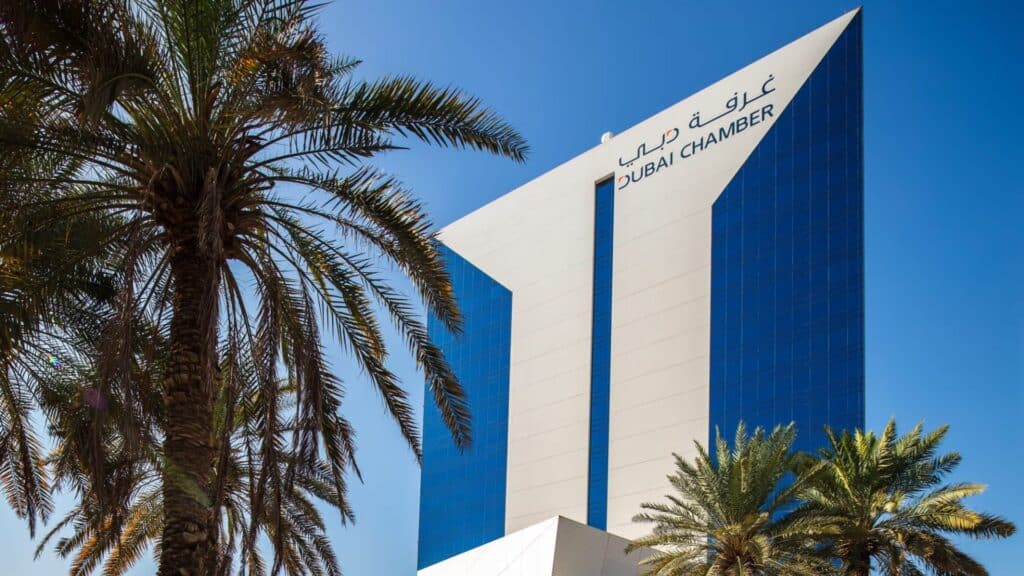
Dubai Chamber Introduces ESG Label to Promote Sustainable Business Practices Original Article: https://esgnews.com/dubai-chamber-introduces-esg-label-to-promote-sustainable-business-practices/ Promoting Sustainable Growth: The Dubai Chamber’s ESG Label aims to embed sustainability into business practices, aligning with global best practices. Holistic Evaluation: The label evaluates ESG maturity and readiness, providing companies with actionable insights to enhance their sustainability efforts. Increased Business Value: Companies that earn the ESG Label benefit from improved brand reputation and greater appeal to investors. Dubai Chamber Launches ESG Label for Businesses The Dubai Chamber of Commerce has unveiled its new Environmental, Social, and Governance (ESG) Label, a strategic initiative to promote sustainable business practices in the region. Developed by the chamber’s Centre for Responsible Business, this label helps organizations assess their ESG readiness and maturity, providing recognition that can drive business growth. ESG has become a strategic priority for companies of all sizes, creating a demand for integrating sustainability into core business practices. The Dubai Chamber’s ESG Label is designed to meet this need by benchmarking companies against global and regional standards. “The Dubai Chamber of Commerce ESG Label addresses the need for a holistic approach to sustainable business practices that benefit society and the environment,” said Mohammad Ali Rashed Lootah, President and CEO of Dubai Chambers. “By shifting the emphasis from corporate social responsibility to ESG labelling, we aim to encourage businesses to adopt comprehensive strategies that embed sustainability into their core operations and decision-making processes.” The ESG Label was developed with input from globally recognized ESG experts and the local business community to ensure alignment with both global best practices and local requirements. The label evaluates companies based on their ESG maturity, providing a detailed feedback report and a maturity level score. Successful applicants receive an ESG Label certificate valid for one year. Any organization that has been established for at least two years can apply for the label. Achieving the label offers several benefits, including alignment with ESG best practices, enhanced brand image and reputation, and increased value for potential investors. Recently, the chamber organized a virtual roadshow attended by 224 participants to introduce the ESG Label. The session covered key concepts of ESG, the development framework, and the application process, along with the benefits for businesses. More sessions are planned to foster greater engagement within the business community. The Centre for Responsible Business, which spearheaded the initiative, continues to play a crucial role in promoting responsible and sustainable business practices in Dubai. By providing tools, platforms, and access to expertise, the centre supports companies in embedding governance, sustainability, and social responsibility into their operations, ultimately enhancing their performance and social contributions. The Dubai Chamber’s ESG Label represents a significant step towards encouraging sustainable business practices in the region, helping companies align with global standards and improve their overall impact on society and the environment. Related Blogs: https://caleedo.com/blogs/ Subscribe to Our Newsletter Thank you for Signing Up Please correct the marked field(s) below.1,true,6,Contact Email,2 Thank you for Signing Up Please correct the marked field(s) below.1,true,6,Contact Email,2 Facebook Twitter Youtube Medium Twitter Instagram Spotify Original Article: https://esgnews.com/dubai-chamber-introduces-esg-label-to-promote-sustainable-business-practices/ Promoting Sustainable Growth: The Dubai Chamber’s ESG Label aims to embed sustainability into business practices, aligning with global best practices. Holistic Evaluation: The label evaluates ESG maturity and readiness, providing companies with actionable insights to enhance their sustainability efforts. Increased Business Value: Companies that earn the ESG Label benefit from improved brand reputation and greater appeal to investors. Dubai Chamber Launches ESG Label for Businesses The Dubai Chamber of Commerce has unveiled its new Environmental, Social, and Governance (ESG) Label, a strategic initiative to promote sustainable business practices in the region. Developed by the chamber’s Centre for Responsible Business, this label helps organizations assess their ESG readiness and maturity, providing recognition that can drive business growth. ESG has become a strategic priority for companies of all sizes, creating a demand for integrating sustainability into core business practices. The Dubai Chamber’s ESG Label is designed to meet this need by benchmarking companies against global and regional standards. “The Dubai Chamber of Commerce ESG Label addresses the need for a holistic approach to sustainable business practices that benefit society and the environment,” said Mohammad Ali Rashed Lootah, President and CEO of Dubai Chambers. “By shifting the emphasis from corporate social responsibility to ESG labelling, we aim to encourage businesses to adopt comprehensive strategies that embed sustainability into their core operations and decision-making processes.” The ESG Label was developed with input from globally recognized ESG experts and the local business community to ensure alignment with both global best practices and local requirements. The label evaluates companies based on their ESG maturity, providing a detailed feedback report and a maturity level score. Successful applicants receive an ESG Label certificate valid for one year. Any organization that has been established for at least two years can apply for the label. Achieving the label offers several benefits, including alignment with ESG best practices, enhanced brand image and reputation, and increased value for potential investors. Recently, the chamber organized a virtual roadshow attended by 224 participants to introduce the ESG Label. The session covered key concepts of ESG, the development framework, and the application process, along with the benefits for businesses. More sessions are planned to foster greater engagement within the business community. The Centre for Responsible Business, which spearheaded the initiative, continues to play a crucial role in promoting responsible and sustainable business practices in Dubai. By providing tools, platforms, and access to expertise, the centre supports companies in embedding governance, sustainability, and social responsibility into their operations, ultimately enhancing their performance and social contributions. The Dubai Chamber’s ESG Label represents a significant step towards encouraging sustainable business practices in the region, helping companies align with global standards and improve their overall impact on society and the environment. Related Blogs: https://caleedo.com/blogs/ Subscribe to Our Newsletter Thank you for Signing Up Please correct the marked field(s) below.1,true,6,Contact Email,2 Thank you for Signing Up Please correct the marked field(s) below.1,true,6,Contact Email,2 Facebook Twitter Youtube Medium Twitter Instagram Spotify
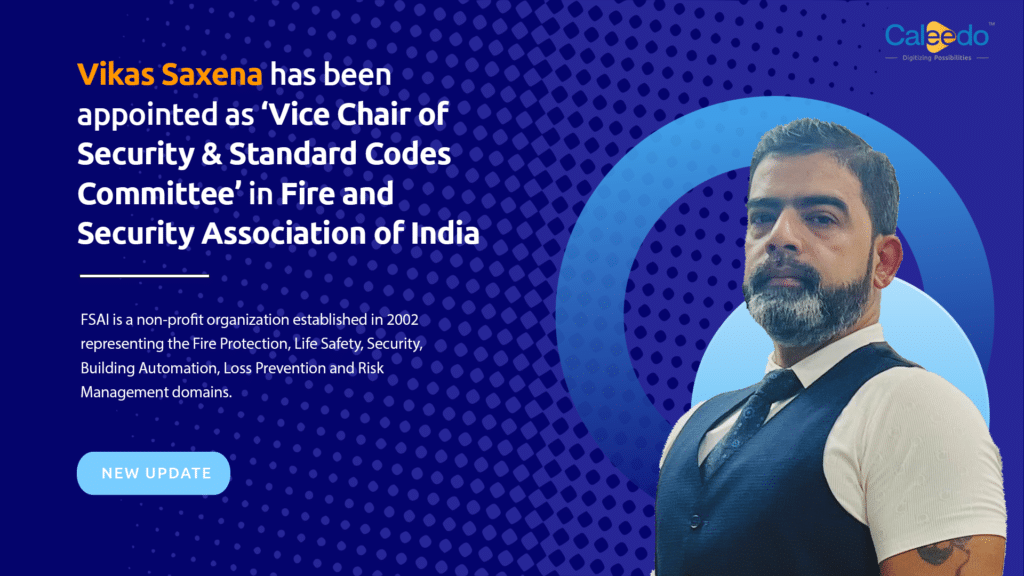
Vikas Saxena, CEO – Caleedo appointed as Vice Chair of Security Codes & Standards Committee at FSAI
Synergy: Caleedo two-day boot camp, Synergy 2024 Caleedo recently organised a two-day boot camp, Synergy 2024. At Synergy, we took a step back to connect as a team, recharge, and learn from each other. We explored new ideas, celebrated our wins, and built even stronger bonds. Day 1 started with insightful sessions by Vikas Saxena (CEO) on business & strategy and by Arabinda Chakraborty (CTO) on product & technology. The day concluded with our awards ceremony – Caleedo Super8 awards. Day 2 of Synergy began with a captivating guest session by Dr. Rakesh Arya, the CEO of RENEW. Dr. Arya, a renowned expert in the field of rapid entertainment and education, delivered an enlightening session on growth mindset, resposibility, ambition, habbits and time management. Synergy was a resounding success, providing a valuable platform for team building, synergizing, brainstorming, and reliving Caleedo values. Synergy was a memorable event that strengthened team bonds and reinforced Caleedo’s commitment to growth and innovation. was a resounding success, providing a valuable platform for team building, synergizing, brainstorming, and reliving Caleedo values. was a memorable event that strengthened team bonds and reinforced Caleedo’s commitment to growth and innovation. Synergy was a resounding success, providing a valuable platform for team building, synergizing, brainstorming, and reliving Caleedo values. was a memorable event that strengthened team bonds and reinforced Caleedo’s commitment to growth and innovation. was a resounding success, providing a valuable platform for team building, synergizing, brainstorming, and reliving Caleedo values. was a memorable event that strengthened team bonds and reinforced Caleedo’s commitment to growth and innovation. was a resounding success, providing a valuable platform for team building, synergizing, brainstorming, and reliving Caleedo values. was a memorable event that strengthened team bonds and reinforced Caleedo’s commitment to growth and innovation. Synergy was a resounding success, providing a valuable platform for team building, synergizing, brainstorming, and reliving Caleedo values. was a memorable event that strengthened team bonds and reinforced Caleedo’s commitment to growth and innovation. was a resounding success, providing a valuable platform for team building, synergizing, brainstorming, and reliving Caleedo values. was a memorable event that strengthened team bonds and reinforced Caleedo’s commitment to growth and innovation. Synergy was a resounding success, providing a valuable platform for team building, synergizing, brainstorming, and reliving Caleedo values. was a memorable event that strengthened team bonds and reinforced Caleedo’s commitment to growth and innovation. Know more Know more
Synergy: Caleedo two-day boot camp, Synergy 2024

Synergy: Caleedo two-day boot camp, Synergy 2024 Caleedo recently organised a two-day boot camp, Synergy 2024. At Synergy, we took a step back to connect as a team, recharge, and learn from each other. We explored new ideas, celebrated our wins, and built even stronger bonds. Day 1 started with insightful sessions by Vikas Saxena (CEO) on business & strategy and by Arabinda Chakraborty (CTO) on product & technology. The day concluded with our awards ceremony – Caleedo Super8 awards. Day 2 of Synergy began with a captivating guest session by Dr. Rakesh Arya, the CEO of RENEW. Dr. Arya, a renowned expert in the field of rapid entertainment and education, delivered an enlightening session on growth mindset, resposibility, ambition, habbits and time management. Synergy was a resounding success, providing a valuable platform for team building, synergizing, brainstorming, and reliving Caleedo values. Synergy was a memorable event that strengthened team bonds and reinforced Caleedo’s commitment to growth and innovation. was a resounding success, providing a valuable platform for team building, synergizing, brainstorming, and reliving Caleedo values. was a memorable event that strengthened team bonds and reinforced Caleedo’s commitment to growth and innovation. Synergy was a resounding success, providing a valuable platform for team building, synergizing, brainstorming, and reliving Caleedo values. was a memorable event that strengthened team bonds and reinforced Caleedo’s commitment to growth and innovation. was a resounding success, providing a valuable platform for team building, synergizing, brainstorming, and reliving Caleedo values. was a memorable event that strengthened team bonds and reinforced Caleedo’s commitment to growth and innovation. was a resounding success, providing a valuable platform for team building, synergizing, brainstorming, and reliving Caleedo values. was a memorable event that strengthened team bonds and reinforced Caleedo’s commitment to growth and innovation. Synergy was a resounding success, providing a valuable platform for team building, synergizing, brainstorming, and reliving Caleedo values. was a memorable event that strengthened team bonds and reinforced Caleedo’s commitment to growth and innovation. was a resounding success, providing a valuable platform for team building, synergizing, brainstorming, and reliving Caleedo values. was a memorable event that strengthened team bonds and reinforced Caleedo’s commitment to growth and innovation. Synergy was a resounding success, providing a valuable platform for team building, synergizing, brainstorming, and reliving Caleedo values. was a memorable event that strengthened team bonds and reinforced Caleedo’s commitment to growth and innovation. Know more Know more
Caleedo is shortlisted for Cohort 8.2 of the Wadhwani Liftoff Program!

Caleedo is shortlisted for Cohort 8.2 of the Wadhwani Liftoff Program! We are thrilled to announce that Caleedo has been shortlisted for Cohort 8.2 of the Wadhwani Liftoff program! Being a part of this cohort offers us a tremendous opportunity to collaborate with leading mentors, entrepreneurs, and industry experts, helping us to further accelerate our growth and impact. We are grateful to the Wadhwani Foundation for this recognition and look forward to an inspiring journey ahead. The program is designed to help early-stage startups in India achieve their growth goals, product market fit, and secure funding.
Unlocking ROI for indoor air quality monitoring in offices
Unlocking ROI for indoor air quality monitoring in offices In today’s evolving business landscape, organizations are constantly seeking ways to optimize operations and enhance employee well-being in workplaces. One of the most critical aspect of employee well-being is indoor air quality (IAQ). It is established that, indoor air significantly impacts employee productivity, health & wellness, and overall satisfaction levels. Investing in an IAQ monitoring system presents a compelling case for organizations but most organizations and decision makers are not aware of the return on investment (ROI) for IAQ monitoring. In this blog, we delve into the ROI for investing in an IAQ monitoring system and why organizations should consider this investment as a strategic and most imperative investment for the well-being of their employees. The growing importance of IAQ Indoor air quality has gained prominence with increasing awareness of its impact on human health and productivity. There are numerous research reports that link poor IAQ with various health issues such as allergies, asthma, and respiratory problems, which can lead to increased absenteeism and reduced employee performance. In the new era of workplaces, where employee well-being is paramount, ensuring clean and healthy indoor air in workplace is no longer optional but essential. 89% of employees agree that the air they breathe in offices have a direct impact on their health and well-being (Honeywell Healthy Buildings Survey 2022). In India alone, 55% of surveyed employees have expressed a strong concern about the quality of indoor air that they breathe in offices (Honeywell Healthy Buildings Survey 2022). The trend remains the same for other geographical regions like Middle-east, ASEAN, US, and UK. Indoor air quality has now become a near-universal concern for the public at large. Reduced absenteeism in workplace Poor IAQ has a direct correlation with the number of sick leaves. A research by the World Green Building Council found that poor IAQ in workplaces can increase the rate of sick leaves by up to 35%. With the help of IAQ monitoring systems that help detect PM particles (PM 1, PM 2.5, PM 10) in real-time, organizations can take immediate and timely measures to improve indoor air, thereby, reducing the exposure to such harmful pollutants. This proactive approach minimizes the risk of illness among employees, leading to fewer sick days. Enhanced cognitive function Harvard T.H Chan, School of Public Health came up with a ground-breaking study in 2017, which highlighted that the quality of indoor air impacts the cognitive function of employees. The study also found a 26.4% higher test scores for employees working in green certified buildings that had better indoor air quality. Employees working in environments with good air quality exhibit better decision-making skills, improved concentration, and higher overall productivity. An investment in IAQ monitoring ensures that employees are working in an environment that allows them to perform at their best, thus boosting overall business performance. Regulatory compliances and risk management Adhering to indoor air quality standards and regulations is becoming increasingly important. While there are several regulations around IAQ that buildings need to adhere to in the current times, there are many more regulations coming up in the near-future. Some of these new upcoming regulations include: National Green Tribunal (NGT) recommended Government of India to mandate monitoring and reporting of IAQ in all public buildings. The initiative was put in motion to work out appropriate standards and protocols for IAQ to safeguard public health under the Environmental Protection act. Upcoming labor legislations in India to mandate categorization of workplaces as factories and monitoring of indoor environment parameters like IAQ, cleanliness, ventilation, temperature, dust particles, etc. ESG disclosures made mandatory by SEBI for listed entities; SEBI in its advisory paper has made disclosure of ESG initiatives (including indoor air quality parameters) a part of reporting framework to stock exchanges. These disclosures are to be made public along with the financial reports of the listed entities. Formulation of new regulations & legislations around IAQ to safeguard public health is a Global phenomenon and is not limited to India. Dubai’s Ministry of Climate Changes and Environment introduced the National Air Quality Agenda 2031, the agenda proposed 3 pillars for: Monitoring: Referred to measurement of air pollution and related parameters both indoor and outdoor. Mitigation: Involved a range of required actions to mitigate any anomalies related to air pollution. Management: Related to measures that will allow for interventions and initiatives to be effectively implemented, tracked, and controlled to reach the overall goal of improved air quality. Apart from these, non-compliance to public health & safety regulations can lead to hefty fines and legal concerns for organizations. In this case, IAQ monitoring helps businesses to not just stay compliant with local and international air quality standards, but also mitigate the risk of legal repercussions. Enhanced employee satisfaction and retention Employees today value workplaces that prioritize their health and well-being. Organizations demonstrating their commitment to safeguard employee health & safety benefits from higher employee retention and engagement. Honeywell’s Healthy Buildings Survey, 2022 provides us with various statistics to establish this. The survey found that: 73% of C-level executives would consider leaving their jobs over an unhealthy indoor environment 65% of all employees surveyed, said that it’s very or extremely important to be informed about building’s IAQ levels Another survey from Kimerbly Clark, highlighted that 71% of employees see workplace hygiene as a reflection of the management These data points provide enough evidence for organizations to take IAQ and overall quality of the indoor environment seriously. Investments towards IAQ monitoring & reporting will help organizations to ensure healthy indoor air and also establish their commitment by showcasing IAQ parameters in real-time to employees. This investment will enhance employee satisfaction, reduce turnover rates, and attract top talent who seek employers that prioritize their health and well-being. Adherence to healthy building standards Investing in IAQ monitoring systems is crucial for businesses aiming to meet and exceed healthy building standards like the WELL V2 by IWBI, LEED (Leadership in Energy and Environmental Design), BREEAM (Building Research Establishment Environmental Assessment Method) and other recognized healthy building certifications. These standards emphasize the importance of indoor environmental quality, including indoor air, to promote health and
UAE sets pace for Environmental Sustainability across MEA
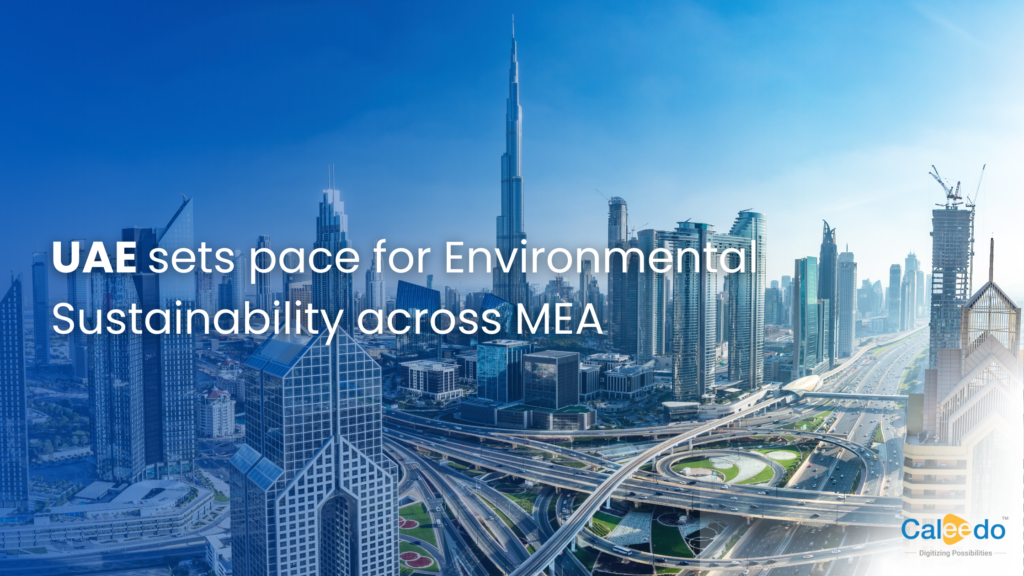
UAE sets pace for Environmental Sustainability across MEA Original Article – https://www.sustainabilitymenews.com/environmental-social/uae-sets-pace-for-environmental-sustainability-across-mea The United Arab Emirates remains the leader, by most key measures, in environmental sustainability and climate action across the Gulf and Africa, says a new Agility Global report that tracks government and business policies, practices and investment related to the environment. The findings, are contained in a report that updates Agility’s Middle East and Africa Environmental Sustainability Scorecard, issued last November. The Scorecard examined the performance of 17 MEA countries in environmental sustainability outcomes, government policies and corporate practices. South Africa and the UAE led as the top performing countries in their respective regions and overall. The new stand-alone report focuses on the UAE and says that the Emirates outscores all five other GCC countries in key areas of environmental progress and sustainability. It concludes that the UAE: 1. Possesses a “strong base” in green investment, innovation and technology by the government, but that businesses in the UAE stand to improve private sector innovation and investment 2. Scores well in infrastructure and transport because of its investment in mass transit, electric vehicle charging and cleaner port infrastructure 3. Beefed up climate financing regulations and net-zero reporting and monitoring 4. Boosted nuclear and solar capacity 5. Focuses on air quality, water scarcity and mangrove conservation to protect its natural environment 6. Performs well in waste management, innovating to promote circularity and banning single-use plastics in 2024 “The UAE shows strong collaboration between the government and private sectors in implementing its environmental sustainability agenda,” the report says. “While further progress is needed in areas such as green finance, lowering barriers to entry in the energy market, and filling remaining regulatory gaps, the country is well positioned to enhance its regional leadership role.” The report noted the country’s leadership in green hydrogen pilot projects, and highlighted its sustainability startup accelerator, Catalyst. It also cites UAE government estimates that the green energy transition could attract AED 600 billion in fresh investment in renewables and clean energy while boosting exports by AED 25 billion and generating 160,000 new jobs in the Emirates. Agility Global Chairman Tarek Sultan said: “The UAE is becoming a global leader in sustainability by demonstrating the seriousness of its commitment to clean energy, green infrastructure and climate financing assistance for developing countries. “Its US$54 billion pledge towards investing in renewables by 2030 and $30B commitment to assisting developing countries in making the clean energy transition are notable. We believe that the scope and scale of the Emirates’ sustainability agenda will generate green-growth opportunities for future-minded investors and businesses.” The UAE report builds on the results of the 17-country Scorecard, which described MEA nations as “relative late comers to global sustainable development” but said they “are rapidly stepping-up their sustainability strategies, programs and investments.” The Scorecard used 48 performance and progress indicators to assess performance and compare countries. The indicators include data, regulatory frameworks, policy assessments, incentives and corporate practices across six pillar areas: green investment and technology; sustainable infrastructure and transport; governance and reporting; energy transition; environmental ecosystems; and circularity. Last fall, roughly two-thirds of UAE business people surveyed for the Scorecard said climate change affects their business operations; and half said their companies would allocate 5% to 20% of capital expenditure toward achieving environmental sustainability targets. The UAE report was commissioned by Agility Global, a multi-business owner and operator and investor, listed on the Abu Dhabi Securities Exchange (ADX). It was compiled by Horizon Group, a Geneva-based firm that specializes in research and analysis for international organizations, governments and leading businesses. At COP28, Agility joined 13 other businesses to form the World Economic Forum’s Leaders for a Sustainable MENA, pledging to address climate change in a region where only 12% of MENA businesses have set a net-zero target. Two of Agility Global’s three largest operating businesses (Menzies and Tristar) have committed to net zero. Together, Menzies and Tristar accounted for more than 74% of FY 2023 revenues. Agility Global’s third-largest business, Agility Logistics Parks, developed the first ever EDGE ADVANCED certified “zero-carbon ready” warehouses in the GCC (in Saudi Arabia) and West Africa (in Côte D’Ivoire). Subscribe to Our Newsletter Thank you for Signing Up Please correct the marked field(s) below.1,true,6,Contact Email,2 Thank you for Signing Up Please correct the marked field(s) below.1,true,6,Contact Email,2 Facebook Twitter Youtube Medium Twitter Instagram Spotify Original Article – https://www.sustainabilitymenews.com/environmental-social/uae-sets-pace-for-environmental-sustainability-across-mea The United Arab Emirates remains the leader, by most key measures, in environmental sustainability and climate action across the Gulf and Africa, says a new Agility Global report that tracks government and business policies, practices and investment related to the environment. The findings, are contained in a report that updates Agility’s Middle East and Africa Environmental Sustainability Scorecard, issued last November. The Scorecard examined the performance of 17 MEA countries in environmental sustainability outcomes, government policies and corporate practices. South Africa and the UAE led as the top performing countries in their respective regions and overall. The new stand-alone report focuses on the UAE and says that the Emirates outscores all five other GCC countries in key areas of environmental progress and sustainability. It concludes that the UAE: 1. Possesses a “strong base” in green investment, innovation and technology by the government, but that businesses in the UAE stand to improve private sector innovation and investment 2. Scores well in infrastructure and transport because of its investment in mass transit, electric vehicle charging and cleaner port infrastructure 3. Beefed up climate financing regulations and net-zero reporting and monitoring 4. Boosted nuclear and solar capacity 5. Focuses on air quality, water scarcity and mangrove conservation to protect its natural environment 6. Performs well in waste management, innovating to promote circularity and banning single-use plastics in 2024 “The UAE shows strong collaboration between the government and private sectors in implementing its environmental sustainability agenda,” the report says. “While further progress is needed in areas such as green finance, lowering barriers to entry in the energy market, and filling remaining regulatory gaps, the country is well
Smart Workplaces: Merging Technology and Human Needs

Smart Workplaces: Merging Technology and Human Needs Digital technology is reimagining the way workplaces operate and people do business. Developments such as the internet of things (IoT) present a variety of diverse opportunities across many industries and are also transforming modern workplaces and service operations. This shift is evident in the trend toward creating smart office — in which technology is used to make the physical work environment intelligent, adaptable to business objectives, experiential, and oriented to health & wellness standards. What is a smart workplace? A smart workplace or responsive workplace is an office space that uses technology to adjust to the varying needs of the people using it. Post the pandemic, most organizations are also taking pre-emptive steps to ensure that the workplaces foster health and well-being of the occupants by adhering to Indoor air, indoor environment, surface hygiene, water quality standards which can be tracked digitally against established benchmarks. This not only facilitates ESG and sustainability compliance mission of the organization but also elevate the employer equity and help in retaining and attracting talent in the business. “Responsive” means that every aspect of the workplace, from collaborative tools to the built space, is able to respond to an individual’s needs and context. Why Do Organizations need a Smart Workplace? Organisations understand that employees – who have largely enjoyed the work-from-home experience – have higher expectations of what their office should offer. The smart workplace is seen as dynamic, diverse, adaptable, agile, collaborative and supportive. Leaders also want the smart workplace to facilitate collaboration, productivity and efficiency. And having quality data will help to shape the future of work with data led decision-making. The idea behind the responsive workplace is to orchestrate people, services, processes, business outcomes, and most importantly, to administer these operations under one common digital system. By doing so, businesses can get more out of their workplaces, assets, support services while keeping employees happier and productive as well as analyse a vast amount of workplace data on these parameters to make more informed business decisions. Smart workplace technologies In order to track, monitor, and digitise the above aspects of a workplace, a smart workplace leverages various technologies like: Internet of things (IoT): IoT is essential for a smart workplace, IoT technology helps in enhancing efficiency, productivity, and employee well-being through automation and personalized environments. It improves safety and security, enables data-driven decision-making, and supports sustainability by optimizing resource use. Machine learning: Machine learning, a subset of artificial intelligence, involves training algorithms to learn from and make predictions based on data. It is vital for a smart workplace as it enables continuous improvement and innovation by uncovering patterns and trends within workplace data. Interconnectivity and digital orchestration: Interconnectivity and digital orchestration in a smart workplace, involves seamlessly linking of various digital systems and devices to work together harmoniously. This interconnectivity enables real-time data exchange and provides a more coordinated & orchestrated automation system for workplace mangers. It supports smooth operations, and improves decision-making through integrated insights that provides correlation between various metrics tracked by different systems, fostering a digital ecosystem. Improved collaboration tools: Smart workplaces also feature technologies that improve human-to-human communication for both in-person and remote employees. These tools can include digital whiteboards for easily syncing notes and facilitating brainstorming sessions, improved conference rooms and collaboration channels. Health & wellness performance scorecards: Health and wellness performance in a smart workplace is an important necessity than a luxury, in the current context. Realtime displays in public areas and administration dashboards on key workplace environment and wellness performance metrics allows preventive and proactive remedial actions which in turn can provide a secure shield of health security for employees, occupants, and visitors. What are the benefits of smart workplace technologies? Smart workplace technologies offer a plethora of benefits for organizations: Increased Efficiency and Productivity: Automation of routine tasks allows employees to focus on more valuable work, while optimized workflows reduce the time and effort spent on administrative tasks. Enhanced Employee Experience: Personalized workplaces adjust to individual preferences, enhancing comfort and productivity. Improved communication and collaboration tools streamline teamwork, making it easier for employees to connect and positively impact employee experience. Improved Decision-Making: Real-time data and analytics provide actionable insights that inform strategic decisions. Predictive analytics help anticipate and address issues before they escalate, leading to more proactive and informed management. Energy Savings: Energy-efficient systems and automated resource management reduce operational costs by minimizing waste and optimizing resource use. Predictive maintenance strategies further cut expenses by preventing costly downtime and repairs. For example, research highlighted by Timbergrove, which specializes in IoT and automation solutions, suggests that smart buildings utilizing technologies such as temperature sensors, smart thermostats and accounting sensors for human occupation could cut energy costs by 15 to 25 percent. Sustainability: Smart workplace technologies optimize resource use, reducing waste and environmental impact. Energy management systems lower the workplace’s carbon footprint, contributing to a more sustainable operation. Flexibility and Scalability: Cloud-based solutions and interconnected devices allow for easy scaling and adaptation to changing business needs. Remote work support enables flexible working arrangements, making it easier to manage a dynamic workforce. In conclusion When you’re conceptualizing a smart workplace, start by thinking about the incremental steps that can radically improve employee happiness, elevate health & wellbeing, improve productivity and service and cost efficiency in the business. Subscribe to Our Newsletter Thank you for Signing Up Please correct the marked field(s) below.1,true,6,Contact Email,2 Thank you for Signing Up Please correct the marked field(s) below.1,true,6,Contact Email,2 Facebook Twitter Youtube Medium Twitter Instagram Spotify Digital technology is reimagining the way workplaces operate and people do business. Developments such as the internet of things (IoT) present a variety of diverse opportunities across many industries and are also transforming modern workplaces and service operations. This shift is evident in the trend toward creating smart office — in which technology is used to make the physical work environment intelligent, adaptable to business objectives, experiential, and oriented to health & wellness standards. What is a smart workplace? A smart workplace or responsive workplace is an office space that uses technology to adjust to the varying needs of the people using it. Post the pandemic, most organizations are also taking pre-emptive steps to ensure that the workplaces foster health and
ESG Implementation is Soaring in Dubai as Only 8% Haven’t Adopted an ESG Programme
ESG Implementation is Soaring in Dubai as Only 8% Haven’t Adopted an ESG Programme Original Article – https://thefintechtimes.com/esg-implementation-is-soaring-in-dubai-as-only-8-havent-adopted-an-esg-programme/ A new study by the Dubai Chamber of Commerce, one of the three chambers operating under the umbrella of Dubai Chambers, has revealed the motivations of companies, assessed potential obstacles to ESG implementation, and highlighted the positive impact of responsible business practices. The survey has arrived as the Dubai Chamber of Commerce sets out to determine the level of adoption of environmental, social and governance (ESG) practices among the emirate’s business community. It indicates that the main drivers of ESG adoption among participants include both economic and value-based drivers. The top three economic drivers were increased efficiency, maintaining competitiveness, and operational benefits, while the three most prominent value-based drivers included a commitment to ethical business practices, social responsibility, and demonstrating leadership in ESG. It also analysed the adoption of ESG practices among three categories of companies. These included family businesses, multinational companies, and private companies. The results indicated that the primary economic motivation for multinational companies was to increase efficiency, while family businesses identified enhanced efficiency and operational benefits as key economic drivers. Private companies identified maintaining their competitiveness in the market as their top economic driver. Leadership in Responsible Practices Commenting on the survey results, His Excellency Mohammad Ali Rashed Lootah, president and CEO of Dubai Chambers, said: “Dubai continues to serve as a role model in advancing corporate social responsibility as a key priority among the emirate’s business community. We are keen to accelerate the adoption of ESG frameworks by the private sector and ensure that these are implemented in line with international best practices to deepen the contribution of organisations to society.” His Excellency added: “The results of this survey indicate strong levels of awareness and a commitment to the adoption of responsible business practices in the emirate. The success achieved recently by Dubai and the UAE in hosting the COP28 summit reflects the continuing drive to adhere to sustainable and responsible development that creates a tangible positive impact in the best interests of the environment, the economy, and society as a whole.” The growing importance of ESG as a strategic priority for organisations of all sizes has created a need for companies to clarify the associated roles and responsibilities more transparently by identifying the individuals responsible for executing ESG policies and practices. The study’s findings indicate that institutional frameworks and incentives from key stakeholders have the potential to accelerate ESG adoption among the Dubai business community and highlight ways in which organisations could enhance their ESG data capabilities including investing in technological solutions, training programmes, and data governance frameworks. Understanding motivations In terms of value-based motivations, multinational companies focused mainly on demonstrating leadership in ESG practices, while family businesses highlighted the desire to be a socially responsible organisation and commitment to ethical business practices as their key drivers. The most prominent value-related motivation among private companies was a commitment to ethical business practices. The survey invited Dubai-based companies to measure their adoption of ESG practices against four performance levels across a series of criteria. The ‘comprehensive’ level represented the highest level and referred to the adoption of an integrated approach to ESG in all key areas. This was followed by: the ‘solid’ level, indicating a systematic focus on some practices the ‘limited’ level, applied to businesses using unsystematic methods to adopt certain practices; ‘absent’ – the lowest level indicating the absence of a programme for ESG practices. How strong is ESG adoption The results of the ESG Pulse Survey, which was conducted by Dubai Chamber of Commerce’s Centre for Responsible Business during the second half of 2023. It showed that 62 per cent of participating companies have adopted ESG practices at a ‘comprehensive’ or ‘solid’ level, with 26 per cent of companies selecting ‘comprehensive’ and 36 pet cent ‘solid,’ 36 per cent of companies indicated that they have adopted ESG practices at a ‘limited’ level. Meanwhile, eight per cent stated that they have not yet adopted an ESG programme. The analysis revealed that companies typically pursue ESG practices voluntarily based on their recognition that this is the right choice to achieve the desired benefits. The study also found that the publication of ESG reports is still in its infancy, as implementation is generally hampered by a lack of adequate data. Although many companies have commenced ESG reporting, almost a third of respondents in the survey do not have a dedicated department or team responsible for overseeing the implementation of ESG practices. In addition, some of the drivers and constraints of these practices affect SMEs more than large companies, and their impact also varies according to the type of ownership. Tailoring Approaches to Advancing ESG The report’s findings emphasise that there is no one-size-fits-all approach to improving ESG practices, and that tailored measures should be employed according to the size of the company and the type of ownership. Companies should therefore focus on defining stakeholder perceptions and attitudes by enhancing transparency and accountability for their non-financial performance through the adoption of standardised practices and the outsourcing of ESG reporting. The analysis pointed to the need for companies to focus on the knowledge that must be acquired and ensure the credibility of their sources to promote ESG adoption, and also highlighted the importance of developing systematic frameworks to measure the maturity of ESG practices. Dubai Chamber of Commerce’s Centre for Responsible Business plays a pivotal role in promoting responsible and sustainable business practices in the emirate and is committed to supporting and motivating companies to adopt ESG to enhance their performance, competitiveness, and social and environmental contributions. The centre provides a comprehensive range of platforms, tools, and access to knowledge and expertise aimed at helping companies embed governance, sustainability, and social responsibility throughout their corporate operations. Subscribe to Our Newsletter Thank you for Signing Up Please correct the marked field(s) below.1,true,6,Contact Email,2 Thank you for Signing Up Please correct the marked field(s) below.1,true,6,Contact Email,2 Facebook Twitter Youtube Medium Twitter Instagram Spotify Original Article – https://thefintechtimes.com/esg-implementation-is-soaring-in-dubai-as-only-8-havent-adopted-an-esg-programme/ A new study by the Dubai Chamber of Commerce, one of the three chambers operating under the umbrella