
Why Residents Still Smell the STP — And How Intelligent Odour Control Fixes It
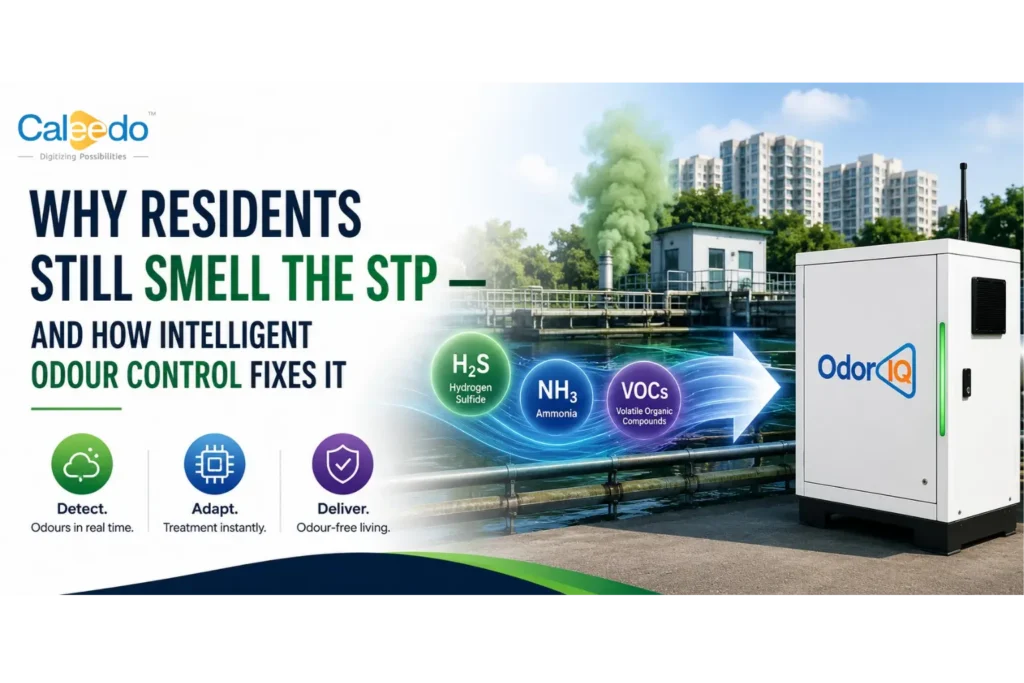
Why Residents Still Smell the STP — And How Intelligent Odour Control Fixes It Ask any facility manager of a township or gated community what they hear most often, and “the STP smells today” will rank near the top. What makes these complaints frustrating is that they keep arriving even when the STP has an in-built odour treatment unit running on schedule. The plant logs say everything is fine. The residents on the 14th floor disagree. The gap between the two is rarely a hardware failure — it’s a control-logic failure. The real culprit: fixed-logic odour control Most conventional STP odour treatment systems run on fixed timers or fixed dosing. They neutralize a steady, assumed odour load. But sewage doesn’t behave that way. Influent volumes spike during morning peaks. Sludge thickening and dewatering release sharp, intermittent bursts of Hydrogen Sulphide (H₂S), Ammonia (NH₃), and Volatile Organic Compounds (VOCs). Anaerobic pockets form whenever aeration falters, even briefly. Against these surges, a fixed-output system simply under-treats — and the untreated gas vents into the air residents breathe. The shift: from fixed logic to closed-loop intelligence This is the problem OdorIQ™ is engineered to solve. Designed for modern STPs, OdorIQ integrates UV-based photonic treatment, embedded control electronics, and IoT-based visibility into a single closed-loop system. Gas sensors continuously monitor H₂S, NH₃, and composite VOC signatures in the exhaust stream. Edge intelligence translates these readings into a real-time odour activity index. UV output is then automatically modulated to match the actual load — neutralizing odour-causing gases before atmospheric discharge, exactly when needed. The result is process-synchronized deodorization rather than blind, continuous treatment. For STPs with variable loads — municipal plants, large campuses, sites with sludge handling — OdorIQ™ Adaptive delivers sensor-driven, dynamic control. For residential STPs and housing societies with predictable operating windows, OdorIQ™ Sync provides time-scheduled, process-aligned treatment. Both are chemical-free, consumable-free, and retrofit-ready. Why this matters for residents The complaint cycle in townships isn’t really about technology gaps — it’s about visibility gaps. With IoT-enabled analytics, alerts, and historical logs, OdorIQ gives operators evidence of exactly when, where, and why odour spiked, and proof of how the system responded. That shift, from reactive defence to observable performance, is what finally puts resident complaints to rest. Download OdorIQ Guide Indoor Air Quality (IAQ) is no longer just a facilities management concern – it has become a strategic priority at the boardroom level, especially in commercial real estate. As organizations focus on employee well-being, ESG goals, and operational efficiency, IAQ is emerging as a critical business factor. Poor indoor air – containing pollutants such as PM2.5, carbon dioxide (CO₂), volatile organic compounds (VOCs), nitrogen dioxide (NO₂), and ozone (O₃) – can negatively impact employee health and cognitive performance. This leads to increased absenteeism, reduced productivity, and higher operational costs. In today’s workplace, where employees spend a significant amount of time indoors, maintaining healthy air quality is directly linked to workforce performance and satisfaction. Research shows that improved IAQ enhances concentration, decision-making, and overall productivity – making it a key driver of business success. Additionally, IAQ is gaining importance in ESG (Environmental, Social, and Governance) frameworks, where organizations are expected to provide safe, healthy, and sustainable environments. Compliance with standards like ASHRAE guidelines, WELL Building Standards (V2) and real-time environmental monitoring has become essential. For Heads of Facilities and EHS leaders, this shift means moving beyond periodic air quality checks to continuous IAQ monitoring. Real-time data helps detect issues early, optimize HVAC performance, and ensure consistent indoor comfort. In commercial real estate, IAQ is also becoming a competitive differentiator. Buildings with advanced air quality monitoring systems attract premium tenants, improve occupancy rates, higher rentals and enhance brand reputation. Caleedo’s Indoor Air Quality Monitoring solutions empower organizations with actionable insights, enabling them to create healthier, smarter, and future-ready workplaces. 👉 Download IAQ Monitoring Guide Disclaimer: This document is intended for informational purposes only and does not constitute professional engineering or regulatory advice.
Smart Washroom Management for Airports & Malls | Caleedo
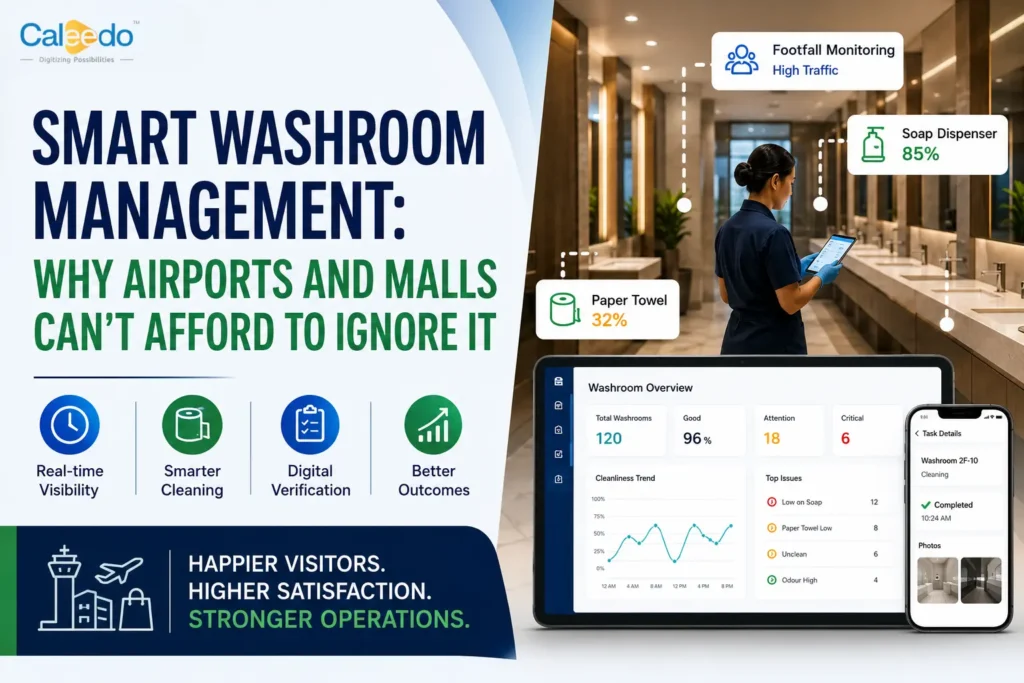
Smart Washroom Management: Why Airports and Malls Can’t Afford to Ignore It Poor washroom experiences silently damage your venue’s reputation. Smart washroom management gives facility teams the real-time visibility to act before visitors notice. In airports and shopping malls, every guest touchpoint matters. Yet one of the most visited spaces – the washroom – is still managed through fixed schedules and paper checklists in most large venues. The result? Missed issues, wasted cleaning rounds, and guest complaints that could have been prevented. What is smart washroom management? Smart washroom management uses IoT sensors, real-time footfall data, and digital task verification to move facility teams from reactive to predictive. Instead of cleaning on a clock, staff are alerted based on actual usage. Consumable levels are monitored automatically. Every service round is logged digitally — no paper, no guesswork. Why it matters for airport and mall operations Research shows that washroom quality is among the top three factors affecting overall venue satisfaction scores. For airport operations heads and mall managers, a poorly maintained washroom doesn’t just frustrate visitors – it directly impacts NPS scores, dwell time, and tenant satisfaction. With smart washroom solutions, operations teams can reduce unnecessary cleaning rounds by up to 30%, cut consumable wastage, and resolve issues before visitors encounter them. The Caleedo advantage Caleedo’s facility management platform integrates smart washroom intelligence alongside your broader building data – giving operations teams a single dashboard for real-time alerts, staff attendance verification, and SLA compliance reporting. No more blind spots in your facility. Ready to eliminate washroom blind spots? Discover how Caleedo helps airport and mall operations teams deliver consistent, data-driven washroom management at scale. Download the full case study Indoor Air Quality (IAQ) is no longer just a facilities management concern – it has become a strategic priority at the boardroom level, especially in commercial real estate. As organizations focus on employee well-being, ESG goals, and operational efficiency, IAQ is emerging as a critical business factor. Poor indoor air – containing pollutants such as PM2.5, carbon dioxide (CO₂), volatile organic compounds (VOCs), nitrogen dioxide (NO₂), and ozone (O₃) – can negatively impact employee health and cognitive performance. This leads to increased absenteeism, reduced productivity, and higher operational costs. In today’s workplace, where employees spend a significant amount of time indoors, maintaining healthy air quality is directly linked to workforce performance and satisfaction. Research shows that improved IAQ enhances concentration, decision-making, and overall productivity – making it a key driver of business success. Additionally, IAQ is gaining importance in ESG (Environmental, Social, and Governance) frameworks, where organizations are expected to provide safe, healthy, and sustainable environments. Compliance with standards like ASHRAE guidelines, WELL Building Standards (V2) and real-time environmental monitoring has become essential. For Heads of Facilities and EHS leaders, this shift means moving beyond periodic air quality checks to continuous IAQ monitoring. Real-time data helps detect issues early, optimize HVAC performance, and ensure consistent indoor comfort. In commercial real estate, IAQ is also becoming a competitive differentiator. Buildings with advanced air quality monitoring systems attract premium tenants, improve occupancy rates, higher rentals and enhance brand reputation. Caleedo’s Indoor Air Quality Monitoring solutions empower organizations with actionable insights, enabling them to create healthier, smarter, and future-ready workplaces. 👉 Download IAQ Monitoring Guide Disclaimer: This document is intended for informational purposes only and does not constitute professional engineering or regulatory advice.
Why Indoor Air Quality (IAQ) is Becoming a Boardroom Issue in Commercial Real Estate
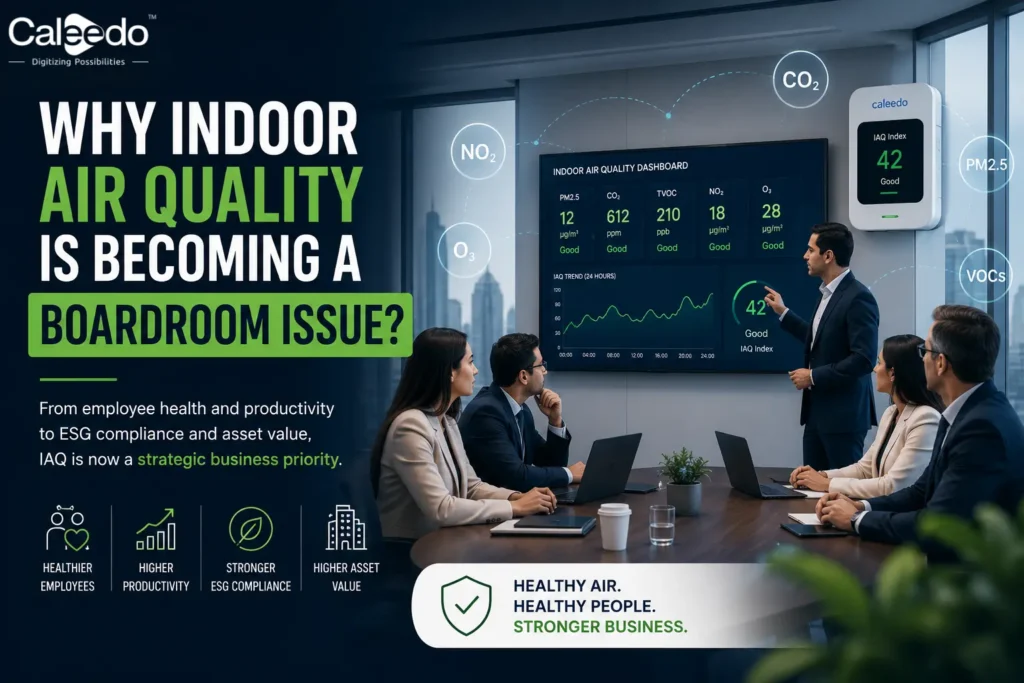
Why Indoor Air Quality is Becoming a Boardroom Issue? Indoor Air Quality (IAQ) is no longer just a facilities management concern – it has become a strategic priority at the boardroom level, especially in commercial real estate. As organizations focus on employee well-being, ESG goals, and operational efficiency, IAQ is emerging as a critical business factor. Poor indoor air – containing pollutants such as PM2.5, carbon dioxide (CO₂), volatile organic compounds (VOCs), nitrogen dioxide (NO₂), and ozone (O₃) – can negatively impact employee health and cognitive performance. This leads to increased absenteeism, reduced productivity, and higher operational costs. In today’s workplace, where employees spend a significant amount of time indoors, maintaining healthy air quality is directly linked to workforce performance and satisfaction. Research shows that improved IAQ enhances concentration, decision-making, and overall productivity – making it a key driver of business success. Additionally, IAQ is gaining importance in ESG (Environmental, Social, and Governance) frameworks, where organizations are expected to provide safe, healthy, and sustainable environments. Compliance with standards like ASHRAE guidelines, WELL Building Standards (V2) and real-time environmental monitoring has become essential. For Heads of Facilities and EHS leaders, this shift means moving beyond periodic air quality checks to continuous IAQ monitoring. Real-time data helps detect issues early, optimize HVAC performance, and ensure consistent indoor comfort. In commercial real estate, IAQ is also becoming a competitive differentiator. Buildings with advanced air quality monitoring systems attract premium tenants, improve occupancy rates, higher rentals and enhance brand reputation. Caleedo’s Indoor Air Quality Monitoring solutions empower organizations with actionable insights, enabling them to create healthier, smarter, and future-ready workplaces. 👉 Download IAQ Monitoring Guide Disclaimer: This document is intended for informational purposes only and does not constitute professional engineering or regulatory advice. Indoor Air Quality (IAQ) is no longer just a facilities management concern – it has become a strategic priority at the boardroom level, especially in commercial real estate. As organizations focus on employee well-being, ESG goals, and operational efficiency, IAQ is emerging as a critical business factor. Poor indoor air – containing pollutants such as PM2.5, carbon dioxide (CO₂), volatile organic compounds (VOCs), nitrogen dioxide (NO₂), and ozone (O₃) – can negatively impact employee health and cognitive performance. This leads to increased absenteeism, reduced productivity, and higher operational costs. In today’s workplace, where employees spend a significant amount of time indoors, maintaining healthy air quality is directly linked to workforce performance and satisfaction. Research shows that improved IAQ enhances concentration, decision-making, and overall productivity – making it a key driver of business success. Additionally, IAQ is gaining importance in ESG (Environmental, Social, and Governance) frameworks, where organizations are expected to provide safe, healthy, and sustainable environments. Compliance with standards like ASHRAE guidelines, WELL Building Standards (V2) and real-time environmental monitoring has become essential. For Heads of Facilities and EHS leaders, this shift means moving beyond periodic air quality checks to continuous IAQ monitoring. Real-time data helps detect issues early, optimize HVAC performance, and ensure consistent indoor comfort. In commercial real estate, IAQ is also becoming a competitive differentiator. Buildings with advanced air quality monitoring systems attract premium tenants, improve occupancy rates, higher rentals and enhance brand reputation. Caleedo’s Indoor Air Quality Monitoring solutions empower organizations with actionable insights, enabling them to create healthier, smarter, and future-ready workplaces. 👉 Download IAQ Monitoring Guide Disclaimer: This document is intended for informational purposes only and does not constitute professional engineering or regulatory advice.