
From Conventional to Sustainable: Shaping the Future of Real Estate Development

From Conventional to Sustainable: Shaping the Future of Real Estate Development In a rapidly changing world, sustainability has emerged as a cornerstone of responsible development across various industries. The real estate sector, in particular, has recognized the importance of integrating sustainability practices into its operations. Once considered a noble endeavor sustainability has now emerged as a strategic game-changer for developers, showcasing a symbiotic relationship between profitability and environmental consciousness. In this blog, we’ll discover how this dynamic duo – sustainability and profitability, is reshaping the landscape of real estate development. Sustainability in real estate: A Fundamental Shift The modern landscape of real estate is witnessing a remarkable shift – one that is driven by demands for efficiency, occupant well-being, and a lighter ecological footprint. The ESG-focused expectations are growing rapidly. The solution? Sustainable environments that seamlessly integrate ergonomic design, biophilic elements, and advanced technologies. No longer confined to a mere buzzword, sustainability has become a guiding principle that reshapes how we envision, construct, and manage the spaces we inhabit. It transcends token green features in real estate and encompasses a holistic approach to design, construction, and operations that minimize negative impacts on the environment while optimizing resource efficiency. By integrating energy-efficient technologies, water-saving fixtures, and eco-friendly construction materials, real estate developers not only get to build a better future or attract buyers but also curtail operational expenses. So how do sustainability practices make a positive impact on the financial performance of real estate developers (aka the bottom line) Contrary to the notion that sustainability comes at a high cost, integrating eco-friendly features can yield significant financial benefits in the long run. Here are a few benefits of integrating sustainable practices into the development of ‘healthy buildings’ that can lead to long-term gains: Energy Efficiency and Cost Savings: Sustainable buildings are designed to be energy-efficient, leading to lower utility bills and operational costs over time. Higher Property Value: Green buildings tend to have higher resale and rental values due to their attractive features and cost-saving potential. Regulatory Incentives: Many governments offer incentives, tax breaks, and grants to developers who adopt sustainable practices, directly improving the bottom line. Tenant Attraction and Retention: Businesses and residents are increasingly valuing sustainable spaces, making them more likely to choose properties that align with their values. Reduced Maintenance Costs: Sustainable materials often require less maintenance and replacement, leading to reduced expenditure on repairs. Enhanced Market Competitiveness: Developers who embrace sustainability gain a competitive edge in a market that’s increasingly eco-conscious. Future-Proofing Investments: Sustainable buildings are aligned with future regulatory trends, reducing the risk of obsolescence and ensuring long-term relevance. The result? A direct positive impact on the bottom line. Occupant Well-being: A Catalyst for Success The concept of “healthy buildings” goes beyond mere aesthetics; it delves into the well-being of occupants, leading to a chain reaction of positive outcomes that benefit both individuals and businesses. Enhanced Occupant Satisfaction: A healthy building is a comfortable building. Improved air quality, controlled temperatures, and natural light create a conducive environment that fosters occupant contentment. When people feel good within their workspace, it translates into higher morale and a more positive attitude toward work. Similarly, Healthy environments in retail spaces can lead to increased foot traffic and longer shopping times, ultimately boosting sales. Customers are more likely to spend time and money in spaces that prioritize their comfort and well-being. Reduced Absenteeism: Healthy buildings with better air quality contribute to fewer health-related issues among occupants. This results in reduced absenteeism, leading to a more consistent and productive workforce. Higher Worker Productivity: Natural light and well-ventilated spaces positively impact cognitive function, creativity, and focus. As a result, workers are more engaged and productive, leading to increased output and efficiency. The Path Forward For real estate developers, sustainability is no longer an option but a necessity. By prioritizing eco-friendly practices with better standards of living like air quality, effective resource management and so on – developers can create a positive impact on the environment while reaping significant financial rewards. The confluence of ecological responsibility and economic advantage makes sustainable development a clear imperative for the future of the real estate industry. As the world continues to evolve, those who embrace sustainability today will be the leaders of tomorrow. Subscribe to Our Newsletter Thank you for Signing Up Please correct the marked field(s) below.1,true,6,Contact Email,2 Thank you for Signing Up Please correct the marked field(s) below.1,true,6,Contact Email,2 Facebook Twitter Youtube Medium Twitter Instagram Spotify In a rapidly changing world, sustainability has emerged as a cornerstone of responsible development across various industries. The real estate sector, in particular, has recognized the importance of integrating sustainability practices into its operations. Once considered a noble endeavor sustainability has now emerged as a strategic game-changer for developers, showcasing a symbiotic relationship between profitability and environmental consciousness. In this blog, we’ll discover how this dynamic duo – sustainability and profitability, is reshaping the landscape of real estate development. Sustainability in real estate: A Fundamental Shift The modern landscape of real estate is witnessing a remarkable shift – one that is driven by demands for efficiency, occupant well-being, and a lighter ecological footprint. The ESG-focused expectations are growing rapidly. The solution? Sustainable environments that seamlessly integrate ergonomic design, biophilic elements, and advanced technologies. No longer confined to a mere buzzword, sustainability has become a guiding principle that reshapes how we envision, construct, and manage the spaces we inhabit. It transcends token green features in real estate and encompasses a holistic approach to design, construction, and operations that minimize negative impacts on the environment while optimizing resource efficiency. By integrating energy-efficient technologies, water-saving fixtures, and eco-friendly construction materials, real estate developers not only get to build a better future or attract buyers but also curtail operational expenses. So how do sustainability practices make a positive impact on the financial performance of real estate developers (aka the bottom line) Contrary to the notion that sustainability comes at a high cost, integrating eco-friendly features can yield
How IEQ monitoring can help businesses address the ‘Social’ element in ESG?

How IEQ monitoring can help businesses address the ‘Social’ element in ESG? A study by Harvard Business Review found that companies with strong ESG performance were more likely to have a diverse and inclusive workforce, which in turn was linked to better financial performance. But ESG has several other benefits and due to these benefits, it has become important in recent years. Some of the key reasons that make ESG reporting important are: Growing concerns about climate change Consumers & investors becoming increasingly aware about benefits of ESG Laws & regulations that require businesses to declare their ESG goals and initiatives Growing evidence that companies with strong ESG practices perform better financially And most importantly reputation & organizational equity The ‘Social’ element of ESG plays a pivotal role for businesses as it recognizes that companies have a responsibility to address social issues, build positive reputations, mitigate risks, engage with stakeholders, drive innovation, and create long-term value for all stakeholders. Workplaces and offices nowadays play an important role in addressing the ‘S’ of ESG. The most important role that workplaces, offices, and built environments play is by addressing the health and well-being of its occupants. When we are inside an office, workplace or a building, the indoor environment quality significantly impacts our physical, mental, and social health. Impact of IEQ on occupant health and well-being Breathing in a polluted indoor air, exposing to contaminated surfaces or drinking water which may not be pure and healthy at workplaces can pose several risks to your physical health. Some side effects of prolonged exposure to indoor air pollutants and RO water include asthma, respiratory ailments, increased risk of heart attack, hypertension, coronary heart disease, and much more. In some extreme cases, poor indoor air quality in a building can lead to ‘Sick Building Syndrome’ as well. Similarly, working on an unhygienic work desk or eating in a not so hygienically sanitized cafeteria table can make you sick and over a year contribute to a significant number of sick leaves thereby, affecting your productivity, morale, and confidence at workplace. Low productivity and morale at workplace make you feel isolated or depressed and is known to negatively impact your mental and social health at work. Indoor air quality of a workplace has a direct correlation with employee productivity. As per a research by Harvard T.H. Chan institute, poor indoor air quality affects employee cognitive abilities and overall productivity at work. Therefore, indoor environment quality plays a crucial role in helping businesses truly address the ‘Social’ element of ESG by addressing the health and wellness of its employees or occupants. Addressing the ‘Social’ element in ESG Hygieneo, an IoT based SaaS solution for monitoring indoor environment quality parameters like quality of indoor air, surface hygiene, and water hygiene can help organizations take care of the ‘Social’ element in ESG. Measuring, monitoring, and reporting indoor environment quality parameters with our first-of-its-kind SaaS can allow businesses to address the ‘Social’ element of ESG in many ways than one: Health and well-being of building occupants: Buildings can significantly influence the health and well-being aspect of its occupants. Real-time monitoring and timely remediation of IEQ parameters with Hygieneo can foster a healthy, hygienic, and sustainable indoor environment. Social responsibility: Taking measures to safeguard employee health and wellness demonstrates organization’s commitment towards social responsibility and sustainability. Additionally, adopting IoT solutions to monitor IEQ can help organizations to be better prepared for any future outbreaks of covid-like air borne viruses. Experience and comfort: A safe and hygienic indoor environment promote collaboration, boosts employee confidence, satisfaction levels, and overall workplace experience resulting in better employee engagement and retention scores. Diversity and inclusivity: IEQ monitoring is a critical element of ESG. Various studies by leading organizations confirm that companies with strong ESG performance have a more diverse and inclusive workforce as compared to their peers. In summary, by prioritizing the ‘Social’ pivot and adopting digital applications that provide enhanced visibility on IEQ and facilitates remedial measures, businesses can build more sustainable and resilient businesses that benefit everyone involved. Subscribe to Our Newsletter Thank you for Signing Up Please correct the marked field(s) below.1,true,6,Contact Email,2 Thank you for Signing Up Please correct the marked field(s) below.1,true,6,Contact Email,2 Facebook Twitter Youtube Medium Twitter Instagram Spotify A study by Harvard Business Review found that companies with strong ESG performance were more likely to have a diverse and inclusive workforce, which in turn was linked to better financial performance. But ESG has several other benefits and due to these benefits, it has become important in recent years. Some of the key reasons that make ESG reporting important are: Growing concerns about climate change Consumers & investors becoming increasingly aware about benefits of ESG Laws & regulations that require businesses to declare their ESG goals and initiatives Growing evidence that companies with strong ESG practices perform better financially And most importantly reputation & organizational equity The ‘Social’ element of ESG plays a pivotal role for businesses as it recognizes that companies have a responsibility to address social issues, build positive reputations, mitigate risks, engage with stakeholders, drive innovation, and create long-term value for all stakeholders. Workplaces and offices nowadays play an important role in addressing the ‘S’ of ESG. The most important role that workplaces, offices, and built environments play is by addressing the health and well-being of its occupants. When we are inside an office, workplace or a building, the indoor environment quality significantly impacts our physical, mental, and social health. Impact of IEQ on occupant health and well-being Breathing in a polluted indoor air, exposing to contaminated surfaces or drinking water which may not be pure and healthy at workplaces can pose several risks to your physical health. Some side effects of prolonged exposure to indoor air pollutants and RO water include asthma, respiratory ailments, increased risk of heart attack, hypertension, coronary heart disease, and much more. In some extreme cases, poor indoor air quality in a building can lead to ‘Sick Building Syndrome’ as well. Similarly, working on an unhygienic work
Why Digital Nose is useful for good upkeep of washroom?
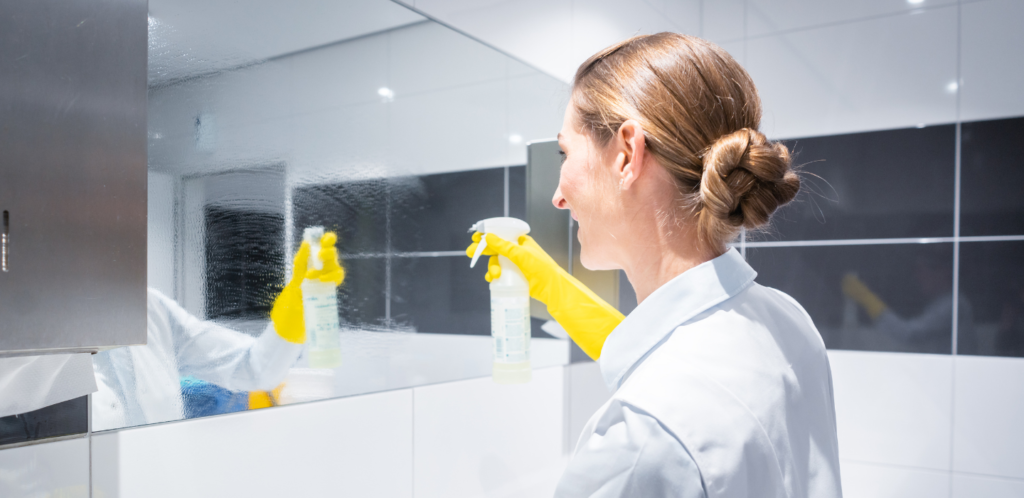
Why Digital Nose is useful for good upkeep of washroom? Many a time, while visiting public visits in washrooms we end up having very negative experiences. As multiple research projects suggest, bad smell and odour features as the top 5 aspects that negatively impact user experience in public washrooms (*Kimberly Clarke, * HR Network News Survey Scotland). Even if the washrooms are cleaned periodically, the cleaning teams find it difficult to eliminate the underlying issues that cause foul odour as most of the corrective and preventive actions fall under the realm of building infrastructure maintenance and upgradation. Reasons for foul odor in public washrooms can be attributed to three basic reasons, even if the housekeeping and cleaning services are managed consistently: – 1. High washroom and varied User footfall pattern during specific times. 2. Washroom air often contains a mixture of gases from various sources, including human excretion (e.g., urine and faeces), cleaning products, personal care products, and microbial activities. This diversity of the source of gases makes it difficult to isolate and identify specific gases as the concentration of these gases is difficult to track in an isolated manner. 3. Under-performance of the ventilation system in the washroom is another important reason. There are wide departures and deviations in the actual performance of the ventilation system wrt to its design. The ageing of inline exhaust fans as well as the deteriorating condition of the uncleaned ducts over a period contributes to ventilation performance degradation. Most of the time, suspected gas generation in washroom start with reliance on human perception of Odours. This is a very relative issue that is dependent on perceived Odour intensity and varies with the concentration of the gas. At low levels of gas concentration, especially when it starts breeding, the human nose may not be able to detect and identify and we must fall back on technology. Further, in situations where multiple gases are generated in the washroom, no specific gases can be singled out and the human nose will detect the odour of the compounded gas. Common gases of concern in washrooms include ammonia (NH3), hydrogen sulphide (H2S), methane (CH4), carbon dioxide (CO2), and various volatile organic compounds (VOCs). While detecting and managing complex gas mixtures in washrooms can be challenging, a multisensory approach needs to be adopted to detect gas generation and consequently bad odour especially with highly sensitive and low detection range for specific gases or VOCs. Adoption of Digital Nose technology does help the cleaning, housekeeping and O&M teams in initiating proactive measures and remedying the washroom environment in a real-time manner. While Digital Nose (read gas sensors) can be valuable tools for monitoring and therefore facilitating ancillary systems /processes to control odour, they should be used in conjunction with human perception assessments to ensure that the overall Odour management strategy is effective and aligns with human expectations. However, detecting and sensing the washroom gas levels is not enough to improve the air quality of the washroom. Smart wireless washroom management solutions backed up with Cloud hosted software application do provide comprehensive solutions that detects the Gas odour breach of the threshold settings and with integrated control system, and auxiliary systems so that the stale air in the washroom can be controlled/eliminated. Often many organizations mask the bad Odour in the washroom by spraying fragrance from air fresheners. Apparently, this gives a bit of instant relief but in reality, it degrades the quality of air and can have a health impact on long-term exposure as the use of air fresheners or sanitisers is associated with elevated levels of volatile organic compounds (VOCs). On the contrary, exposure to foul odour (which is a combination of VOCs, NH3, H2S and CO2 and traces of other organic and inorganic gases), if left unabated can also be a direct cause of pulmonary and tracheal infection on medium to long term exposure, as per leading medical research /journals. Therefore, the process of recirculation and de-odourising the air in the washroom can only improve the washroom indoor environment condition of air without significant CAPEX and retrofitting investment in commercial buildings. Therefore, many organizations global or local, who have set their ESG goals wherein ‘employee health and wellness’ is a key mandate are prioritizing repurposing their workplaces by improving the air quality in workplaces and washrooms as well. Digital nose which forms the foundation for a safe, odour-free and healthy washroom is going to see quantum innovation and application in the times ahead. Written By: Mr. Arabinda Chakraborty Co-Founder And Chief Technology & Product Officer at Caleedo Subscribe to Our Newsletter Work Email Facebook Twitter Youtube Medium Twitter Instagram Spotify Subscribe to Our Newsletter Thank you for Signing Up Please correct the marked field(s) below.1,true,6,Contact Email,2 Thank you for Signing Up Please correct the marked field(s) below.1,true,6,Contact Email,2 Facebook Twitter Youtube Medium Twitter Instagram Spotify Many a time, while visiting public visits in washrooms we end up having very negative experiences. As multiple research projects suggest, bad smell and odour features as the top 5 aspects that negatively impact user experience in public washrooms (*Kimberly Clarke, * HR Network News Survey Scotland). Even if the washrooms are cleaned periodically, the cleaning teams find it difficult to eliminate the underlying issues that cause foul odour as most of the corrective and preventive actions fall under the realm of building infrastructure maintenance and upgradation. Reasons for foul odor in public washrooms can be attributed to three basic reasons, even if the housekeeping and cleaning services are managed consistently: – 1. High washroom and varied User footfall pattern during specific times. 2. Washroom air often contains a mixture of gases from various sources, including human excretion (e.g., urine and faeces), cleaning products, personal care products, and microbial activities. This diversity of the source of gases makes it difficult to isolate and identify specific gases as the concentration of these gases is difficult to track in an isolated manner. 3. Under-performance of the ventilation system in the washroom is another important reason. There are wide