
Indoor Air Quality (IAQ) and Indoor Air Pollution (IAP) – health impact of the most critical pollutants

Indoor Air Quality (IAQ) and Indoor Air Pollution (IAP) – health impact of the most critical pollutants During the last two decades there has been increasing concern within the scientific community over the effects of indoor air quality (IAQ) on health. Changes in building design devised to improve energy efficiency have meant that modern offices are frequently more airtight than older structures. Furthermore, advances in construction technology have caused a much greater use of synthetic building materials. Whilst these improvements have led to more comfortable buildings with lower running costs, they also provide indoor environments in which contaminants are readily produced and may build up to much higher concentrations than are found outside. Indoor environment conditions contribute greatly to human wellbeing, as most people spend around 90% of their time indoors, mainly at home or in the workplace. According to the World Health Organization (WHO), indoor air pollution is responsible for the deaths of 3.8 million people annually. IAQ can be generated inside buildings through occupants’ activities, such as use of electronic machines, use of consumer products, or emission from building materials. Harmful pollutants inside buildings include carbon monoxide (CO), volatile organic compounds (VOCs), particulate matter (PM), aerosol, biological pollutants, and others. Therefore, over the past decade, research on air quality control has begun to shift from outdoor to indoor environments. IAQ normally is a complex mixture of particulate and various gaseous components. IAP compositions differ significantly depending on sources, emission rates, and ventilation conditions. For effective control of IAQ, therefore, it is necessary to determine the sources of air pollution. Moreover, the development of monitoring systems for the measurement of indoor pollutant concentrations as well as key strategies for control and enhancement of IAQ are considered essential. In this paper, we provide a comprehensive overview of the major IAP sources and IAQ-control strategies; we emphasize the sources, characteristics, and health effects of each IAP; we identify and discuss health issues and building-associated illnesses related to an IAQ decrease; Pollutants with the strongest evidence for public health concern include particulate matter (PM), carbon monoxide (CO), ozone (O3), nitrogen dioxide (NO2) and Sulphur dioxide (SO2). Health problems can occur as a result of both short- and long-term exposure to these various pollutants. For some pollutants, there are no thresholds below which adverse effects do not occur. (Source: WHO). Indoor Air Quality (IAQ) and Indoor Air Pollution (IAP) According to the EPA’s definition, IAQ is the air quality within and around buildings and structures, especially as it relates to the health and comfort of building occupants. IAP, meanwhile, refers to the existence of pollutants, such as volatile organic compounds (VOCs), particulate matter (PM), inorganic compounds, physical chemicals, and biological factors, all of which are at high concentrations in the indoor air of non-industrial buildings, and all of which can have negative impacts on the human body. In order to protect people from such pollutants, IAQ has emerged and been developed as a research field [9]. The main parameters for evaluation of IAQ include pollutant concentrations, thermal conditions (temperature, airflow, relative humidity), light, and noise. It has been indicated that IAQ in buildings is significantly affected by three primary factors Outdoor air quality, (ii) human activity in buildings, and (iii) building and construction materials, equipment, and furniture. It is known that outdoor contaminant concentrations and building airtightness have a great influence on IAQ, due to the possibility of transportation of contaminants from outdoors to indoors As outdoor pollutants’ concentrations increase, they are transported from outdoors to the indoor environment via ventilation. Hence, the correlation of outdoor air pollution with IAQ highly depends on the ventilation rate additionally to the lifetimes and mixing ratios of such pollutants. In addition, equipment, such as computers, photocopy machines, printers, and other office machines, emit ozone (O3) and volatile compounds. Common building materials, such as poly (vinyl chloride) PVC floor covering, parquet, linoleum, rubber carpet, adhesive, lacquer, paint, sealant, and particle board, can shed toxic compounds (i.e., alkanes, aromatic compounds, 2-ethylhexanol, acetophenone, alkylated aromatic compounds, styrene, toluene, glycols, glycol esters, hexanol, ketones, esters, siloxane, and formaldehyde) Here’s a brief outlook on the prominent indoor air pollutants, its source and its impact on occupant health their health effects, (Source WHO) and issues related to IAP-based illnesses, including sick building syndrome (SBS) and building-related illness (BRI). Particulate Matter (PM 1.0, 2.5 and 10): Source: Through infusion of fresh air associated with air conditioning systems Infiltration (through human and material movement inside airconditioned space) Surface pollution Health impact: (PM) refers to inhalable particles, composed of sulphate, nitrates, ammonia, sodium chloride, black carbon, mineral dust or water. The health risks associated with particulate matter of less than 10 and 2.5 microns in diameter (PM10 and PM2.5) are especially well documented. PM is capable of penetrating deep into the lung and enter the bloodstream causing cardiovascular (ischemic heart disease), cerebrovascular (stroke) and respiratory impacts. Both long-term and short-term exposure to particulate matter is associated with morbidity and mortality from cardiovascular and respiratory diseases. Long-term exposure has been further linked to adverse perinatal outcomes and lung cancer. In 2013, it was classified as a cause of lung cancer by WHO’s International Agency for Research on Cancer (IARC). It is also the most widely used indicator for assessing the health effects of exposure to air pollution. Carbon Monoxide (CO): Source: Ambient air (vehicular traffic, gaseous effluent emanating from combustion) Internal emissions from combustion activities (charcoal/wood use inside cafeteria/kitchen) Health Impact: Carbon monoxide is a colorless, odorless and tasteless toxic gas produced by the incomplete combustion of carbonaceous fuels such as wood, petrol, charcoal, natural gas, and kerosene. Carbon monoxide diffuses across the lung tissues and into the bloodstream, making it difficult for the body’s cells to bind oxygen. This lack of oxygen damages tissues and cells. Exposure to carbon monoxide can cause difficulties breathing, exhaustion, dizziness, and other flu-like symptoms. Exposure to very high-levels of CO can lead to death. Nitrogen Dioxide (No2): Source: Ambient Air (coal, wood and oil smoke)
From smart buildings to smart workplaces

From smart buildings to smart workplaces The building industry has undergone significant transformation in the last three and half decades. Globally, in the 90s, the Information Technology and Service Management and building automation industry fueled an unprecedented rush in buildings getting wired and networked. This used in the introduction and advent of Intelligent Buildings. The First Wave: Emergence of CMMS In the first wave of intelligent buildings, building operations, maintenance, and management functions were controlled through a Building Automation System (BAS) with or without a Computerized Maintenance Management System (CMMS). CMMS was mostly run as an overlap solution to the BAS system. While the BAS would command and control equipment and systems centrally, collect real-time data, raise alarms, generate performance reports, etc., CMMS gave insights on maintenance performance, uptime & mean time between failures, cost of spares and consumables, and various critical underlying information about Mechanical-Electrical-Plumbing equipment/assets and systems. Building managers, administrators, and building operations crew, therefore, found these automation and software system to be extremely beneficial as they could give data-driven insights about equipment/systems operating performance maintenance management performance, trends, forecasts from a central control room. This was a clear departure from the past where most of these activities were managed manually, and in most cases in an inefficient way. But in the next ten years i.e., from 2000 to 2010, there was a tectonic shift in the building technology and building operations industry. What was the tectonic shift and why did it really happen? In 2008 the subprime mortgage default led to the global meltdown in the real estate industry. The crisis also created the need for bringing transparency in the commercial real estate sector. One such domain was the Common Area Maintenance (CAM) cost which was somewhat opaque from a legacy standpoint and had to be open for external audit. This necessitated a step-change in which the Building Managers were hitherto strategizing the operation, maintenance, and management of the properties and therefore the computation and management of CAM. Tighter governance, analytics, reporting, and most importantly predictability and forecasting was the need of the hour. This led to a tectonic shift in the first decade of the 2000s. The Building Automation Systems and the CMMS applications underwent a complete change; BAS was re-architected as Building Management Systems (BMS) and CMMS evolved further as Computer-Aided Facility Management (CAFM) system such that predictability/forecasting, data analytics, and comprehensive reports and reporting capabilities were available to building/property operations team/s. This led to the evolution of mature, integrated, and holistic enterprise solutions where the data-driven decision-making regime started. The emergence of 3G and Mobile Computing From 2010 to 2020 the world witnessed a complete transformation in the information technology industry. It all started in the early part of 2010 with the emergence of 3G. From mid-2010 onwards many countries switched to 4G and in the last couple of years some select countries have rolled out 5G. This power of computing on mobile phones and enhanced bandwidth brought computing from desktops to mobile phones. Many applications like ERPs, payment transactions, and banking transactions moved from desktops to mobile phones as technology-enabled consumers to access applications from their hand-held devices. The whole focus shifted from desktop computing to mobile computing and therefore gave the building industry an opportunity to look at how enterprise applications can move into a mobile-led operation. From 2018 onwards most of the enterprise applications like BMS, CAFM has started to move to mobile applications. From intelligent buildings to smart workplaces- the new paradigm The pandemic transformed the life, lifestyle, and habits of people. And the impact and importance of digital technologies became more prominent during and post the pandemic. In this context, work and workplaces witnessed the most prominent shift and repurposing, hybrid working emerged as the new genre of working. This necessitated revised space and workplace re-orientation, digitization, and digitalization of workplace activities, remapping and evaluation of employee experience metrics and workplace performance baselining and benchmarking. Referred to as Workplace tech, it is now the fasted growing sub-sector in the proptech eco-system. In the worktech domain, the enterprise applications, unlike the CAFMs, are progressively getting ‘consumer’ focused. Generically referred to as IWMS (Integrated Workplace Management System), these applications by design are mobile-first SaaS, which delivers consumer-grade user experience, cognitive forecasts and business insights unlike never before. IWMS facilitating seamless migration to multiple new use cases as envisaged in hybrid working. Similarly, the BMS architecture has evolved to an edge computing topology with versatile IoT applications which are fast, dependable, and cost-effective. IoT devices /systems are wireless and therefore extremely easy to install and scale. Prominent IoT applications in the repurposed workplaces are social distance monitoring, indoor navigation services, air and surface hygiene solutions, real-time location tracking (RTLS) to name a few. Growing sustainability, ESG and compliance frameworks and awareness on Health and well-being spurring demand for smart built environment Global and regional legislation, international standards and compliance, and organizational commitment to sustainable goals and ESG practices are prompting rapid adoption of Health, hygiene, and wellness-led investments in workplaces and built environments. The illustration below (Fig. 2) demonstrates how companies like Amazon are championing workplace Health, Hygiene, and Wellness as measures to elevate their brand equity. While market regulators like SEBI in India are insisting on and legislating guidelines so that listed companies in India ensure that they report on their ESG goals and achievements as a part of their annual reports, further regulators like NGT (National Green Building Tribunal) have passed a judgment to enforce the government of India to firm up Indoor air quality guidelines for all commercial buildings in India. While ‘digital’ became a global enabling theme across all facets of human life, the workplace and built environment are rapidly transforming to adopt technology and transform how the future of work would be reimagined. Therefore, smart environments cannot, in the future CANNOT remain smart if the design and impact do not address the Health and well-being of their occupants. Subscribe to Our Newsletter Thank you for Signing
A Changing paradigm: Hygiene, Health, and Wellness as critical priorities for smart built environment and workplaces

A Changing paradigm: Hygiene, Health, and Wellness as critical priorities for smart built environment and workplaces The pandemic threw up many new challenges in our lives and especially in the built environment and the workplaces sector. As return to work started happening, new work formats evolved, and therefore, remote working, work from home, and hybrid working gained significant adoption. While ‘work from home’ and remote working would apply to a type of work and, in most cases, a small section of the organization, hybrid working is emerging as the most preferred work format post-pandemic worldwide. Technology is acting as a catalyst to transform legacy; as a built environment, the emergence of smart and connected workplaces is gaining attention and a higher adoption rate. However, the smart workplace and built environment paradigm are now undergoing significant reorientation. Hygiene, Health, and wellness are becoming critical business imperatives from ESG, compliance, and sustainability objectives from an organizational strategy standpoint. The genesis and the evolution of smart built environments and workplaces Researchers and technology pundits are forecasting that human-controlled functions will progressively reduce in the coming 10 years and give way to autonomous and platform-enabled services in most spheres of B2B services. As the digital ecosystem gets a further impact on human life and society, the proliferation of digital applications and technology in the built environment workspaces is now an established phenomenon. According to an article published by Deloitte “The digital built environment and workplace is more measurable and manageable”. Transforming the digital infrastructure in a built environment can help in gaining real-time insights on productivity, availability and user experience. Smart infrastructures can therefore identify patterns, nudge positive employee behaviors, and fine-tune service and support performance in the built environment and workplace. Further, the global pandemic has significantly accelerated innovation and technology adoption in the built environment sector – at the back of new work formats like a hybrid, remote, and WFH and new engagements, namely Gig, which is accelerating the physical workplace design and layouts. Technology facilitates the built environment and workplaces to remain agile, experiential, productive, and collaborative. The smart workplace is a new technology-enabled product form that allows the work environment to meet current and future business needs while creating a digital experience framework that fosters efficiency, collaboration, and high levels of engagement. Smart workplaces in built environments are, therefore, the empowering and transformation lever that helps businesses operate in the new built environment while remaining contemporary, compliant, and efficient. The smart workplaces in the built environment have seen significant adoption search – as last mile connectivity of the internet, mobile computing, and digital-first mindset is rapidly increasing in the world, especially with Gen Z and younger workforces. Hygiene, Health, and wellness as a key priority in the smart-built environment and workplaces In the post-pandemic world, built environments and workplaces are being repurposed with three key objectives : 1. Shield of safety – Hygiene, Health, and wellness 2. Agile 3. Collaborative and experiential environment In response to this, organizations have started to focus on hygiene, health, and wellness programs to meet global standards like WELL, V2, RESET, and LEAD, GBC to name a few. These standards are prescribing guidelines that would make the built environment and the workplaces not only smart but a complaint to current and evolving standards, which converse with the larger goals of sustainability and ESG, which most organizations are now committed to comply with. In certain countries like in UAE, the government is already legislating standards like Indoor air quality and other related guidelines that helps in meeting the Health, hygiene, and wellness agenda in the built environment and workplaces. Interestingly similar initiatives are being taken by the government of India to prescribe and legislate Health, hygiene, and wellness guidelines for commercial buildings, offices, and factories. While “smart” Built environments and workplaces promote a digital-led service, people, process, and outcome management that elevates occupant experience and performance. The new paradigm in a “smart” built environment is also getting extended to provide a hygienic, Health, and wellness complaint environment in this new world of workplaces. The diagram below demonstrates how key drivers like sustainability, Health, Engagement, and Productivity get improved in a smart workplace which also addresses hygiene and wellness as a key matrix and performance objective. Growing sustainability, ESG and compliance frameworks and awareness on Health and well-being spurring demand for smart built environment Global and regional legislation, international standards and compliance, and organizational commitment to sustainable goals and ESG practices are prompting rapid adoption of Health, hygiene, and wellness-led investments in workplaces and built environments. The illustration below (Fig. 2) demonstrates how companies like Amazon are championing workplace Health, Hygiene, and Wellness as measures to elevate their brand equity. While market regulators like SEBI in India are insisting on and legislating guidelines so that listed companies in India ensure that they report on their ESG goals and achievements as a part of their annual reports, further regulators like NGT (National Green Building Tribunal) have passed a judgment to enforce the government of India to firm up Indoor air quality guidelines for all commercial buildings in India. While ‘digital’ became a global enabling theme across all facets of human life, the workplace and built environment are rapidly transforming to adopt technology and transform how the future of work would be reimagined. Therefore, smart environments cannot, in the future CANNOT remain smart if the design and impact do not address the Health and well-being of their occupants. Subscribe to Our Newsletter Thank you for Signing Up Please correct the marked field(s) below.1,true,6,Contact Email,2 Thank you for Signing Up Please correct the marked field(s) below.1,true,6,Contact Email,2 Facebook Twitter Youtube Medium Twitter Instagram Spotify The pandemic threw up many new challenges in our lives and especially in the built environment and the workplaces sector. As return to work started happening, new work formats evolved, and therefore, remote working, work from home, and hybrid working gained significant adoption. While ‘work from home’ and remote working would apply to a type
Visitor Management Systems – Truth versus Hype

Visitor Management Systems – Truth versus Hype Contemporary articles and publications from the Workplace technology industry highlight the benefits and transformational impact visitor management systems have on workplaces. Diving deeper into these claims and assessing the “real life” problems reveals some astonishing insights. A versatile digital visitor management system which addresses real-life organizational challenges must impact the following aspects of a workplace: Experience– A digital application like VMS should enhance the experience of a guest/ Visitor while interacting with other stakeholders in the business like the front office executives, the host, and other service providers whose services may be required during the guest’s visit pleasing and frictionless. Tracking and measuring the guest experience as feedback is equally important. Overall positive feedback ensures that investment in digital technology and the orchestration it achieves has given a decent return on investment for the organization investing in the VMS. Efficiency– Any digital application that orchestrates different stakeholders through a unified workflow that simplifies and enhances collaboration; therefore, consistent outcomes can be considered an efficiency multiplier. Therefore, measuring process time through time motion studies between a traditional process versus a digital system and error rate ratio is important to establish the efficiency multiplier effect in adopting a VMS system instead of a traditional visitor management system. Efficacy- A highly reliable and well-engineered VMS should ensure high efficacy levels, which can be demonstrated through system uptime, consistency in user experience, and data security levels. Emotions– As workplaces are getting repurposed, organizations focus on creating positive vibes and experiential environments. Therefore, any workplace digital application must foster positive emotion. In the case of a VMS, stakeholders can capture the emotion quotient through the feedback trend. Experience in various instances while using the VMS. The following chart demonstrates the key performance indicator of a VMS system when measured against the four E’s (Experience, Efficiency, Efficacy, and Emotions) evaluation metrics. We have tried to capture the key KPIs one must evaluate before investing in a VMS. Once the buyer evaluates a VMS, additional features and functionalities can be assessed as a value-added service. Some of the key value-added services that customers should look out for are: Interoperability- This system must offer open API features for forward and backward integration with other third-party systems and applications like access control systems, CCTV systems, IAQ systems, HVAC & BMS, and Lightning systems, to name a few. Option to digitally integrate other “adjacent” use cases, i.e., in the case of a visitor management system, VMS must offer additional functional modules which can orchestrate visitor/ guest services, host-initiated customized services, etc. Data & Information security standard which meets the enterprise-grade application. VMS is a critical and strategic investment for many organizations, which becomes the foundational block of workplace automation and digitization roadmap. Therefore, organizations must assess, evaluate and take an informed decision based on the above framework. While digitization is critical for repurposing workplaces to be future-ready, application review and management evaluation at the start of the digital journey can save significant cost and downtime challenges. Things like the total cost of ownership of each application, and backward and forward integration investments, including risk assessment and mitigation, if any, must form a part of the evaluation process. Subscribe to Our Newsletter Thank you for Signing Up Please correct the marked field(s) below.1,true,6,Contact Email,2 Thank you for Signing Up Please correct the marked field(s) below.1,true,6,Contact Email,2 Facebook Twitter Youtube Medium Twitter Instagram Spotify Contemporary articles and publications from the Workplace technology industry highlight the benefits and transformational impact visitor management systems have on workplaces. Diving deeper into these claims and assessing the “real life” problems reveals some astonishing insights. A versatile digital visitor management system which addresses real-life organizational challenges must impact the following aspects of a workplace: Experience– A digital application like VMS should enhance the experience of a guest/ Visitor while interacting with other stakeholders in the business like the front office executives, the host, and other service providers whose services may be required during the guest’s visit pleasing and frictionless. Tracking and measuring the guest experience as feedback is equally important. Overall positive feedback ensures that investment in digital technology and the orchestration it achieves has given a decent return on investment for the organization investing in the VMS. Efficiency– Any digital application that orchestrates different stakeholders through a unified workflow that simplifies and enhances collaboration; therefore, consistent outcomes can be considered an efficiency multiplier. Therefore, measuring process time through time motion studies between a traditional process versus a digital system and error rate ratio is important to establish the efficiency multiplier effect in adopting a VMS system instead of a traditional visitor management system. Efficacy- A highly reliable and well-engineered VMS should ensure high efficacy levels, which can be demonstrated through system uptime, consistency in user experience, and data security levels. Emotions– As workplaces are getting repurposed, organizations focus on creating positive vibes and experiential environments. Therefore, any workplace digital application must foster positive emotion. In the case of a VMS, stakeholders can capture the emotion quotient through the feedback trend. Experience in various instances while using the VMS. The following chart demonstrates the key performance indicator of a VMS system when measured against the four E’s (Experience, Efficiency, Efficacy, and Emotions) evaluation metrics. We have tried to capture the key KPIs one must evaluate before investing in a VMS. Once the buyer evaluates a VMS, additional features and functionalities can be assessed as a value-added service. Some of the key value-added services that customers should look out for are: Interoperability- This system must offer open API features for forward and backward integration with other third-party systems and applications like access control systems, CCTV systems, IAQ systems, HVAC & BMS, and Lightning systems, to name a few. Option to digitally integrate other “adjacent” use cases, i.e., in the case of a visitor management system, VMS must offer additional functional modules which can orchestrate visitor/ guest services, host-initiated customized services, etc. Data & Information security standard which
From Conventional to Sustainable: Shaping the Future of Real Estate Development

From Conventional to Sustainable: Shaping the Future of Real Estate Development In a rapidly changing world, sustainability has emerged as a cornerstone of responsible development across various industries. The real estate sector, in particular, has recognized the importance of integrating sustainability practices into its operations. Once considered a noble endeavor sustainability has now emerged as a strategic game-changer for developers, showcasing a symbiotic relationship between profitability and environmental consciousness. In this blog, we’ll discover how this dynamic duo – sustainability and profitability, is reshaping the landscape of real estate development. Sustainability in real estate: A Fundamental Shift The modern landscape of real estate is witnessing a remarkable shift – one that is driven by demands for efficiency, occupant well-being, and a lighter ecological footprint. The ESG-focused expectations are growing rapidly. The solution? Sustainable environments that seamlessly integrate ergonomic design, biophilic elements, and advanced technologies. No longer confined to a mere buzzword, sustainability has become a guiding principle that reshapes how we envision, construct, and manage the spaces we inhabit. It transcends token green features in real estate and encompasses a holistic approach to design, construction, and operations that minimize negative impacts on the environment while optimizing resource efficiency. By integrating energy-efficient technologies, water-saving fixtures, and eco-friendly construction materials, real estate developers not only get to build a better future or attract buyers but also curtail operational expenses. So how do sustainability practices make a positive impact on the financial performance of real estate developers (aka the bottom line) Contrary to the notion that sustainability comes at a high cost, integrating eco-friendly features can yield significant financial benefits in the long run. Here are a few benefits of integrating sustainable practices into the development of ‘healthy buildings’ that can lead to long-term gains: Energy Efficiency and Cost Savings: Sustainable buildings are designed to be energy-efficient, leading to lower utility bills and operational costs over time. Higher Property Value: Green buildings tend to have higher resale and rental values due to their attractive features and cost-saving potential. Regulatory Incentives: Many governments offer incentives, tax breaks, and grants to developers who adopt sustainable practices, directly improving the bottom line. Tenant Attraction and Retention: Businesses and residents are increasingly valuing sustainable spaces, making them more likely to choose properties that align with their values. Reduced Maintenance Costs: Sustainable materials often require less maintenance and replacement, leading to reduced expenditure on repairs. Enhanced Market Competitiveness: Developers who embrace sustainability gain a competitive edge in a market that’s increasingly eco-conscious. Future-Proofing Investments: Sustainable buildings are aligned with future regulatory trends, reducing the risk of obsolescence and ensuring long-term relevance. The result? A direct positive impact on the bottom line. Occupant Well-being: A Catalyst for Success The concept of “healthy buildings” goes beyond mere aesthetics; it delves into the well-being of occupants, leading to a chain reaction of positive outcomes that benefit both individuals and businesses. Enhanced Occupant Satisfaction: A healthy building is a comfortable building. Improved air quality, controlled temperatures, and natural light create a conducive environment that fosters occupant contentment. When people feel good within their workspace, it translates into higher morale and a more positive attitude toward work. Similarly, Healthy environments in retail spaces can lead to increased foot traffic and longer shopping times, ultimately boosting sales. Customers are more likely to spend time and money in spaces that prioritize their comfort and well-being. Reduced Absenteeism: Healthy buildings with better air quality contribute to fewer health-related issues among occupants. This results in reduced absenteeism, leading to a more consistent and productive workforce. Higher Worker Productivity: Natural light and well-ventilated spaces positively impact cognitive function, creativity, and focus. As a result, workers are more engaged and productive, leading to increased output and efficiency. The Path Forward For real estate developers, sustainability is no longer an option but a necessity. By prioritizing eco-friendly practices with better standards of living like air quality, effective resource management and so on – developers can create a positive impact on the environment while reaping significant financial rewards. The confluence of ecological responsibility and economic advantage makes sustainable development a clear imperative for the future of the real estate industry. As the world continues to evolve, those who embrace sustainability today will be the leaders of tomorrow. Subscribe to Our Newsletter Thank you for Signing Up Please correct the marked field(s) below.1,true,6,Contact Email,2 Thank you for Signing Up Please correct the marked field(s) below.1,true,6,Contact Email,2 Facebook Twitter Youtube Medium Twitter Instagram Spotify In a rapidly changing world, sustainability has emerged as a cornerstone of responsible development across various industries. The real estate sector, in particular, has recognized the importance of integrating sustainability practices into its operations. Once considered a noble endeavor sustainability has now emerged as a strategic game-changer for developers, showcasing a symbiotic relationship between profitability and environmental consciousness. In this blog, we’ll discover how this dynamic duo – sustainability and profitability, is reshaping the landscape of real estate development. Sustainability in real estate: A Fundamental Shift The modern landscape of real estate is witnessing a remarkable shift – one that is driven by demands for efficiency, occupant well-being, and a lighter ecological footprint. The ESG-focused expectations are growing rapidly. The solution? Sustainable environments that seamlessly integrate ergonomic design, biophilic elements, and advanced technologies. No longer confined to a mere buzzword, sustainability has become a guiding principle that reshapes how we envision, construct, and manage the spaces we inhabit. It transcends token green features in real estate and encompasses a holistic approach to design, construction, and operations that minimize negative impacts on the environment while optimizing resource efficiency. By integrating energy-efficient technologies, water-saving fixtures, and eco-friendly construction materials, real estate developers not only get to build a better future or attract buyers but also curtail operational expenses. So how do sustainability practices make a positive impact on the financial performance of real estate developers (aka the bottom line) Contrary to the notion that sustainability comes at a high cost, integrating eco-friendly features can yield
How IEQ monitoring can help businesses address the ‘Social’ element in ESG?

How IEQ monitoring can help businesses address the ‘Social’ element in ESG? A study by Harvard Business Review found that companies with strong ESG performance were more likely to have a diverse and inclusive workforce, which in turn was linked to better financial performance. But ESG has several other benefits and due to these benefits, it has become important in recent years. Some of the key reasons that make ESG reporting important are: Growing concerns about climate change Consumers & investors becoming increasingly aware about benefits of ESG Laws & regulations that require businesses to declare their ESG goals and initiatives Growing evidence that companies with strong ESG practices perform better financially And most importantly reputation & organizational equity The ‘Social’ element of ESG plays a pivotal role for businesses as it recognizes that companies have a responsibility to address social issues, build positive reputations, mitigate risks, engage with stakeholders, drive innovation, and create long-term value for all stakeholders. Workplaces and offices nowadays play an important role in addressing the ‘S’ of ESG. The most important role that workplaces, offices, and built environments play is by addressing the health and well-being of its occupants. When we are inside an office, workplace or a building, the indoor environment quality significantly impacts our physical, mental, and social health. Impact of IEQ on occupant health and well-being Breathing in a polluted indoor air, exposing to contaminated surfaces or drinking water which may not be pure and healthy at workplaces can pose several risks to your physical health. Some side effects of prolonged exposure to indoor air pollutants and RO water include asthma, respiratory ailments, increased risk of heart attack, hypertension, coronary heart disease, and much more. In some extreme cases, poor indoor air quality in a building can lead to ‘Sick Building Syndrome’ as well. Similarly, working on an unhygienic work desk or eating in a not so hygienically sanitized cafeteria table can make you sick and over a year contribute to a significant number of sick leaves thereby, affecting your productivity, morale, and confidence at workplace. Low productivity and morale at workplace make you feel isolated or depressed and is known to negatively impact your mental and social health at work. Indoor air quality of a workplace has a direct correlation with employee productivity. As per a research by Harvard T.H. Chan institute, poor indoor air quality affects employee cognitive abilities and overall productivity at work. Therefore, indoor environment quality plays a crucial role in helping businesses truly address the ‘Social’ element of ESG by addressing the health and wellness of its employees or occupants. Addressing the ‘Social’ element in ESG Hygieneo, an IoT based SaaS solution for monitoring indoor environment quality parameters like quality of indoor air, surface hygiene, and water hygiene can help organizations take care of the ‘Social’ element in ESG. Measuring, monitoring, and reporting indoor environment quality parameters with our first-of-its-kind SaaS can allow businesses to address the ‘Social’ element of ESG in many ways than one: Health and well-being of building occupants: Buildings can significantly influence the health and well-being aspect of its occupants. Real-time monitoring and timely remediation of IEQ parameters with Hygieneo can foster a healthy, hygienic, and sustainable indoor environment. Social responsibility: Taking measures to safeguard employee health and wellness demonstrates organization’s commitment towards social responsibility and sustainability. Additionally, adopting IoT solutions to monitor IEQ can help organizations to be better prepared for any future outbreaks of covid-like air borne viruses. Experience and comfort: A safe and hygienic indoor environment promote collaboration, boosts employee confidence, satisfaction levels, and overall workplace experience resulting in better employee engagement and retention scores. Diversity and inclusivity: IEQ monitoring is a critical element of ESG. Various studies by leading organizations confirm that companies with strong ESG performance have a more diverse and inclusive workforce as compared to their peers. In summary, by prioritizing the ‘Social’ pivot and adopting digital applications that provide enhanced visibility on IEQ and facilitates remedial measures, businesses can build more sustainable and resilient businesses that benefit everyone involved. Subscribe to Our Newsletter Thank you for Signing Up Please correct the marked field(s) below.1,true,6,Contact Email,2 Thank you for Signing Up Please correct the marked field(s) below.1,true,6,Contact Email,2 Facebook Twitter Youtube Medium Twitter Instagram Spotify A study by Harvard Business Review found that companies with strong ESG performance were more likely to have a diverse and inclusive workforce, which in turn was linked to better financial performance. But ESG has several other benefits and due to these benefits, it has become important in recent years. Some of the key reasons that make ESG reporting important are: Growing concerns about climate change Consumers & investors becoming increasingly aware about benefits of ESG Laws & regulations that require businesses to declare their ESG goals and initiatives Growing evidence that companies with strong ESG practices perform better financially And most importantly reputation & organizational equity The ‘Social’ element of ESG plays a pivotal role for businesses as it recognizes that companies have a responsibility to address social issues, build positive reputations, mitigate risks, engage with stakeholders, drive innovation, and create long-term value for all stakeholders. Workplaces and offices nowadays play an important role in addressing the ‘S’ of ESG. The most important role that workplaces, offices, and built environments play is by addressing the health and well-being of its occupants. When we are inside an office, workplace or a building, the indoor environment quality significantly impacts our physical, mental, and social health. Impact of IEQ on occupant health and well-being Breathing in a polluted indoor air, exposing to contaminated surfaces or drinking water which may not be pure and healthy at workplaces can pose several risks to your physical health. Some side effects of prolonged exposure to indoor air pollutants and RO water include asthma, respiratory ailments, increased risk of heart attack, hypertension, coronary heart disease, and much more. In some extreme cases, poor indoor air quality in a building can lead to ‘Sick Building Syndrome’ as well. Similarly, working on an unhygienic work
Why Digital Nose is useful for good upkeep of washroom?
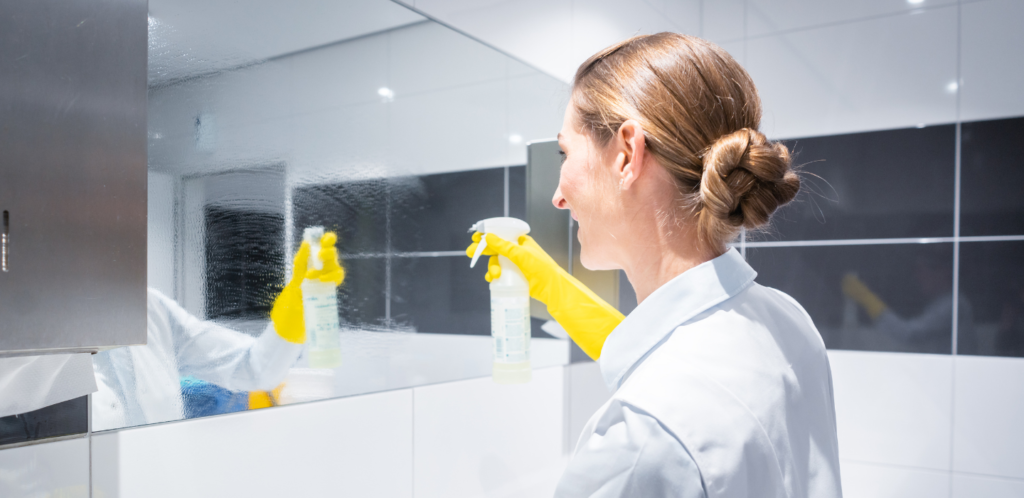
Why Digital Nose is useful for good upkeep of washroom? Many a time, while visiting public visits in washrooms we end up having very negative experiences. As multiple research projects suggest, bad smell and odour features as the top 5 aspects that negatively impact user experience in public washrooms (*Kimberly Clarke, * HR Network News Survey Scotland). Even if the washrooms are cleaned periodically, the cleaning teams find it difficult to eliminate the underlying issues that cause foul odour as most of the corrective and preventive actions fall under the realm of building infrastructure maintenance and upgradation. Reasons for foul odor in public washrooms can be attributed to three basic reasons, even if the housekeeping and cleaning services are managed consistently: – 1. High washroom and varied User footfall pattern during specific times. 2. Washroom air often contains a mixture of gases from various sources, including human excretion (e.g., urine and faeces), cleaning products, personal care products, and microbial activities. This diversity of the source of gases makes it difficult to isolate and identify specific gases as the concentration of these gases is difficult to track in an isolated manner. 3. Under-performance of the ventilation system in the washroom is another important reason. There are wide departures and deviations in the actual performance of the ventilation system wrt to its design. The ageing of inline exhaust fans as well as the deteriorating condition of the uncleaned ducts over a period contributes to ventilation performance degradation. Most of the time, suspected gas generation in washroom start with reliance on human perception of Odours. This is a very relative issue that is dependent on perceived Odour intensity and varies with the concentration of the gas. At low levels of gas concentration, especially when it starts breeding, the human nose may not be able to detect and identify and we must fall back on technology. Further, in situations where multiple gases are generated in the washroom, no specific gases can be singled out and the human nose will detect the odour of the compounded gas. Common gases of concern in washrooms include ammonia (NH3), hydrogen sulphide (H2S), methane (CH4), carbon dioxide (CO2), and various volatile organic compounds (VOCs). While detecting and managing complex gas mixtures in washrooms can be challenging, a multisensory approach needs to be adopted to detect gas generation and consequently bad odour especially with highly sensitive and low detection range for specific gases or VOCs. Adoption of Digital Nose technology does help the cleaning, housekeeping and O&M teams in initiating proactive measures and remedying the washroom environment in a real-time manner. While Digital Nose (read gas sensors) can be valuable tools for monitoring and therefore facilitating ancillary systems /processes to control odour, they should be used in conjunction with human perception assessments to ensure that the overall Odour management strategy is effective and aligns with human expectations. However, detecting and sensing the washroom gas levels is not enough to improve the air quality of the washroom. Smart wireless washroom management solutions backed up with Cloud hosted software application do provide comprehensive solutions that detects the Gas odour breach of the threshold settings and with integrated control system, and auxiliary systems so that the stale air in the washroom can be controlled/eliminated. Often many organizations mask the bad Odour in the washroom by spraying fragrance from air fresheners. Apparently, this gives a bit of instant relief but in reality, it degrades the quality of air and can have a health impact on long-term exposure as the use of air fresheners or sanitisers is associated with elevated levels of volatile organic compounds (VOCs). On the contrary, exposure to foul odour (which is a combination of VOCs, NH3, H2S and CO2 and traces of other organic and inorganic gases), if left unabated can also be a direct cause of pulmonary and tracheal infection on medium to long term exposure, as per leading medical research /journals. Therefore, the process of recirculation and de-odourising the air in the washroom can only improve the washroom indoor environment condition of air without significant CAPEX and retrofitting investment in commercial buildings. Therefore, many organizations global or local, who have set their ESG goals wherein ‘employee health and wellness’ is a key mandate are prioritizing repurposing their workplaces by improving the air quality in workplaces and washrooms as well. Digital nose which forms the foundation for a safe, odour-free and healthy washroom is going to see quantum innovation and application in the times ahead. Written By: Mr. Arabinda Chakraborty Co-Founder And Chief Technology & Product Officer at Caleedo Subscribe to Our Newsletter Work Email Facebook Twitter Youtube Medium Twitter Instagram Spotify Subscribe to Our Newsletter Thank you for Signing Up Please correct the marked field(s) below.1,true,6,Contact Email,2 Thank you for Signing Up Please correct the marked field(s) below.1,true,6,Contact Email,2 Facebook Twitter Youtube Medium Twitter Instagram Spotify Many a time, while visiting public visits in washrooms we end up having very negative experiences. As multiple research projects suggest, bad smell and odour features as the top 5 aspects that negatively impact user experience in public washrooms (*Kimberly Clarke, * HR Network News Survey Scotland). Even if the washrooms are cleaned periodically, the cleaning teams find it difficult to eliminate the underlying issues that cause foul odour as most of the corrective and preventive actions fall under the realm of building infrastructure maintenance and upgradation. Reasons for foul odor in public washrooms can be attributed to three basic reasons, even if the housekeeping and cleaning services are managed consistently: – 1. High washroom and varied User footfall pattern during specific times. 2. Washroom air often contains a mixture of gases from various sources, including human excretion (e.g., urine and faeces), cleaning products, personal care products, and microbial activities. This diversity of the source of gases makes it difficult to isolate and identify specific gases as the concentration of these gases is difficult to track in an isolated manner. 3. Under-performance of the ventilation system in the washroom is another important reason. There are wide